IT Hardware Procurement: A Complete Guide for UK Businesses
IT hardware procurement plays an important role in helping businesses acquire the technology needed to support daily operations, improve productivity and maintain reliable IT infrastructure. From laptops and desktop computers to servers, networking equipment and storage devices, selecting the right hardware requires careful planning and supplier evaluation.
A strategic approach helps organisations manage costs, meet technical requirements and plan for long-term technology needs. This guide explores the key considerations, benefits and best practices of IT hardware procurement for UK businesses.
What Is IT Hardware Procurement?
IT hardware procurement is the process of identifying, sourcing and purchasing physical technology equipment required to support an organisation's IT operations. It involves assessing business requirements, selecting suitable products, evaluating suppliers, comparing costs and arranging equipment delivery.
Unlike general purchasing, IT hardware procurement requires consideration of technical specifications, system compatibility, security requirements and equipment lifecycle costs. Businesses must ensure that purchased technology meets current operational needs while remaining suitable for future growth.
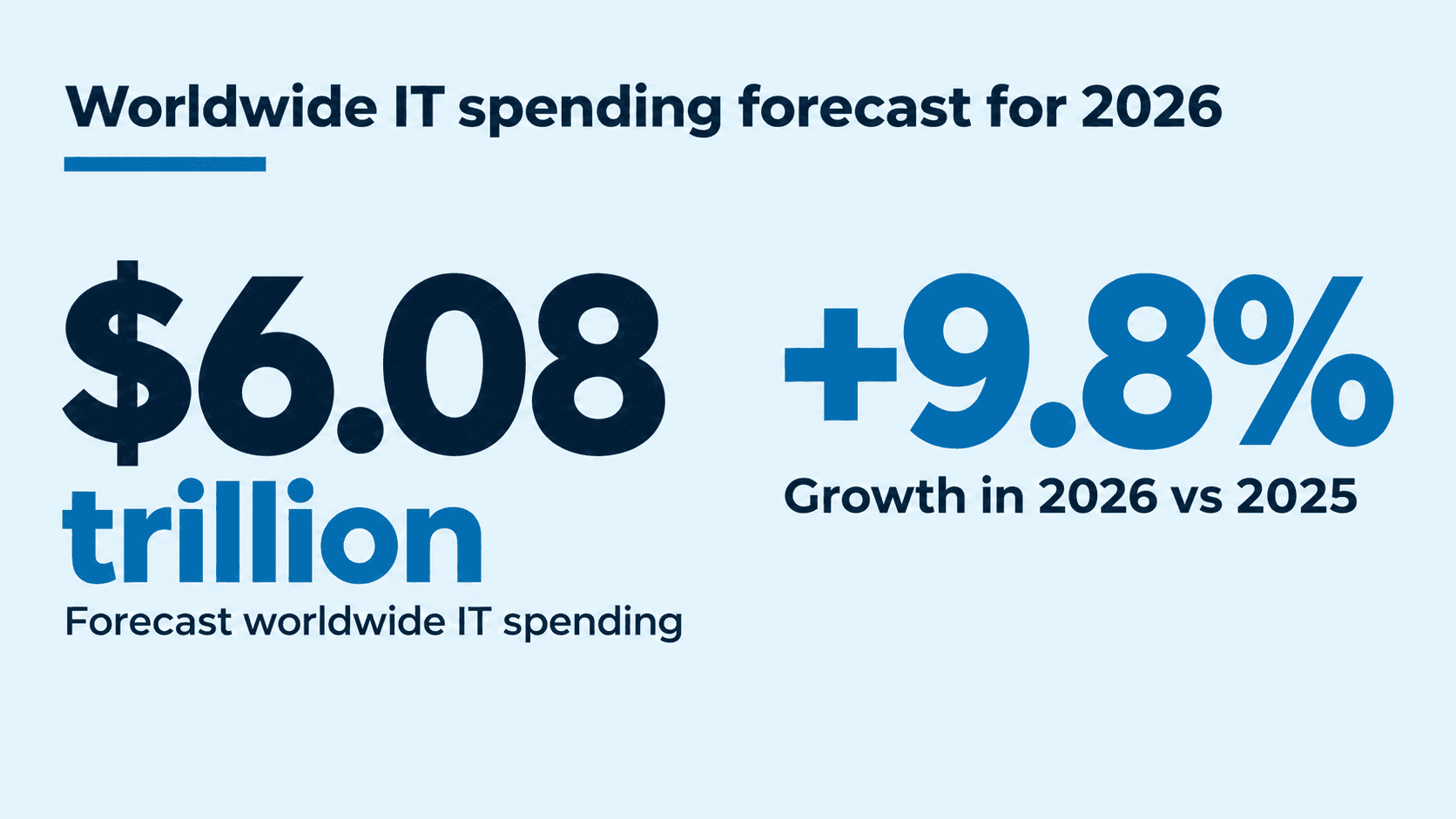
According to the latest forecast by Gartner:
Worldwide IT spending is expected to total $6.08 trillion in 2026, an increase of 9.8% from 2025.
Understanding the Hardware Procurement Process
A structured hardware procurement process typically involves:
- Requirement identification: Determine the equipment, specifications and quantities needed.
- Product selection: Evaluate suitable hardware based on performance, compatibility and business requirements.
- Supplier evaluation: Compare suppliers, pricing, warranties, availability and support arrangements.
- Purchase and delivery: Finalise orders, manage approvals and coordinate equipment delivery.
- Deployment and lifecycle planning: Prepare hardware for use and plan for maintenance, upgrades and eventual replacement.
Businesses can explore DDevices Procurement Services for support with technology sourcing and procurement requirements.
Hardware Procurement vs General IT Procurement
Hardware procurement focuses specifically on physical equipment, whereas general IT procurement covers a wider range of technology-related purchases and services.
| Hardware procurement | General IT procurement |
|---|---|
| Laptops and desktop computers | Software licences and subscriptions |
| Servers and storage devices | Cloud services |
| Networking equipment | IT consultancy and managed services |
| Monitors and peripherals | Technical support services |
| Physical infrastructure components | Digital platforms and technology solutions |
Understanding this distinction helps businesses define their purchasing requirements and select the right procurement approach.
What Types of IT Hardware Do Businesses Need to Procure?
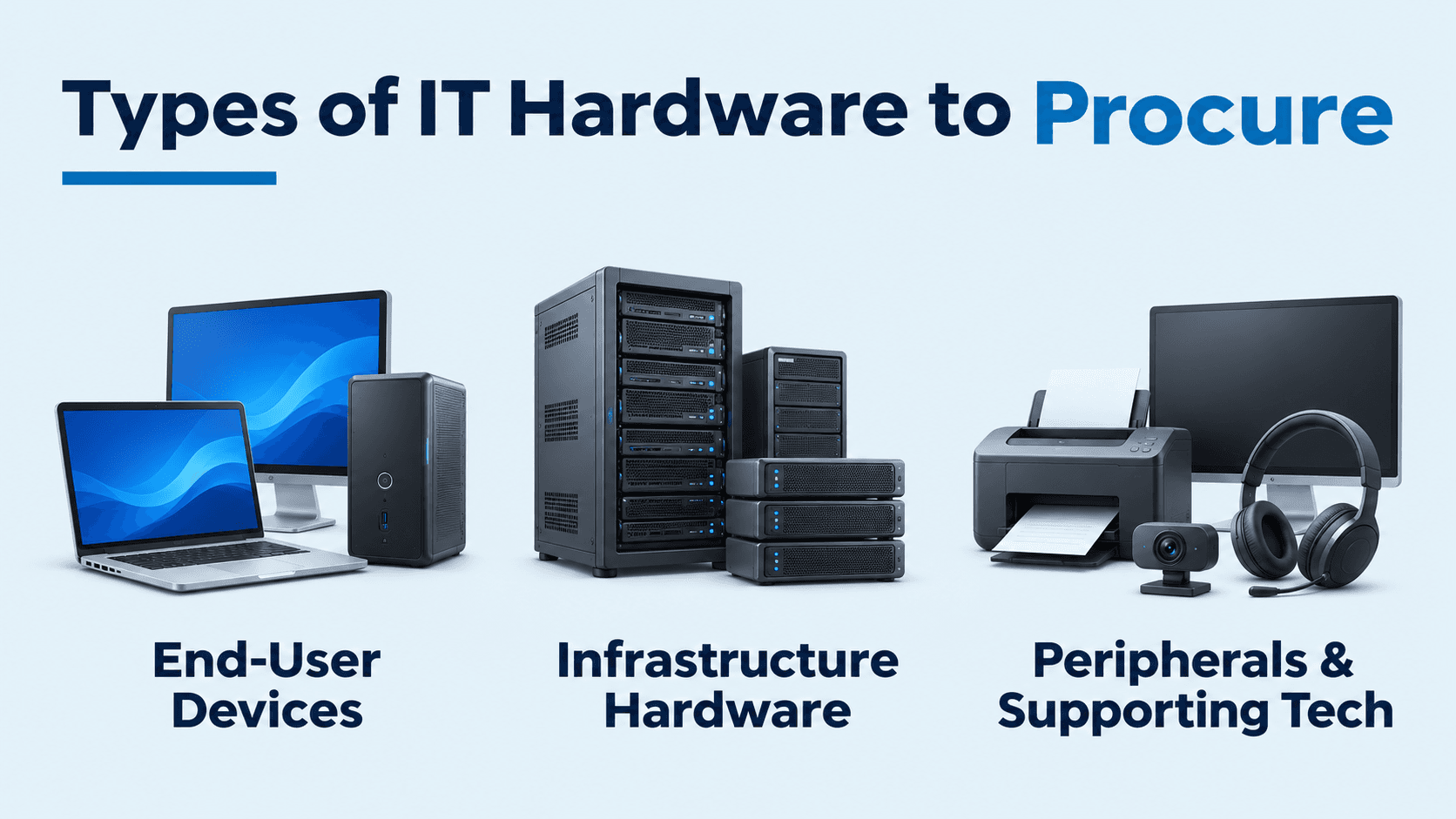
Businesses require different types of IT hardware depending on their operational needs, workforce size and technology infrastructure. Procurement decisions should consider equipment performance, compatibility, scalability and long-term business requirements.
End-User Devices and Workplace Equipment
End-user devices support employees in their daily activities, whether they work in offices, remotely or across multiple locations. Common purchases include:
- Laptops and desktop computers
- Monitors and docking stations
- Business workstations
- Tablets and mobile computing devices
Selecting suitable devices requires consideration of processing power, memory, storage capacity, security features and compatibility with business applications.
Servers, Storage and Networking Infrastructure
Businesses with more demanding IT environments may need infrastructure hardware to support applications, data storage and network connectivity. This includes:
- Physical servers and server racks
- Network switches and routers
- Storage systems and backup appliances
- Wireless access points and network security appliances
These components help organisations maintain reliable infrastructure, manage business data and support connected systems.
Peripherals and Supporting Technology
Peripherals complement primary computing equipment and help employees perform specific tasks. Examples include printers, scanners, webcams, headsets, keyboards and other workplace accessories.
Although these items may represent smaller purchases, businesses should consider their compatibility, reliability and ongoing replacement requirements when planning hardware procurement.
Key Factors to Consider Before Procuring IT Hardware
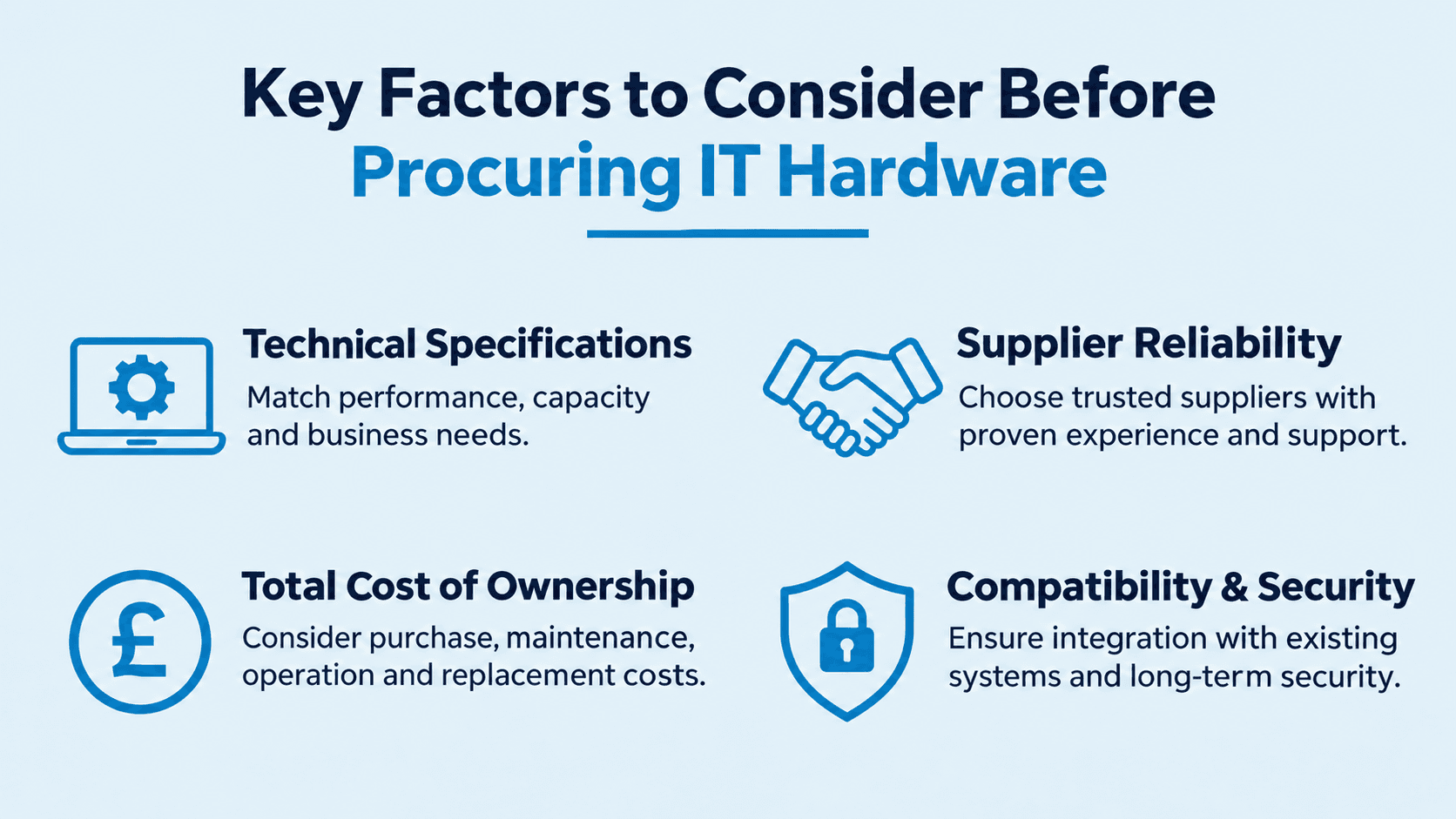
Choosing business hardware involves more than comparing product prices. Organisations should evaluate technical requirements, supplier reliability, security, compatibility and long-term ownership costs to ensure their purchases deliver lasting value.
Technical Specifications and Business Requirements
Hardware specifications should match the tasks employees and business systems need to perform. Consider processor performance, RAM, storage capacity, network connectivity and compatibility with existing applications. For example, standard office users may require business laptops, while engineering teams or data-intensive operations may need higher-performance workstations.
Businesses should also consider scalability to ensure equipment can support future growth without requiring frequent replacements.
Supplier Reliability, Compatibility and Security
Selecting the right supplier is essential for maintaining consistent hardware quality and dependable support. Before purchasing, evaluate:
- Supplier reputation: Review experience, customer feedback and business credentials.
- Product authenticity: Confirm equipment specifications, manufacturer warranties and authorised supply channels.
- Compatibility: Check integration with existing networks, operating systems and business applications.
- Security: Consider firmware updates, manufacturer support periods and secure configuration options.
- After-sales support: Review warranty coverage, repair arrangements and replacement availability.
The UK Government's hardware lifecycle management security policy provides useful considerations for managing hardware security throughout its lifecycle.
Total Cost of Ownership and Budget Planning
The purchase price represents only part of the cost of business hardware. Organisations should consider the total cost of ownership (TCO), including installation, configuration, maintenance, support, energy consumption and eventual replacement.
| Cost factor | What businesses should consider |
|---|---|
| Initial purchase | Hardware price and supplier quotations |
| Deployment | Installation, configuration and setup |
| Maintenance | Repairs, warranties and technical support |
| Operation | Energy consumption and ongoing running costs |
| Replacement | Upgrade cycles and end-of-life disposal |
Comparing these costs helps businesses make informed procurement decisions and avoid choosing equipment based solely on its lowest initial price. Organisations can also use procurement analytics to improve purchasing visibility and support cost-related decisions.
What Are the Benefits of Strategic Hardware Procurement?
Strategic IT hardware procurement helps organisations make informed technology investments, improve operational efficiency and reduce unnecessary expenditure. Rather than purchasing equipment reactively, businesses can align hardware decisions with workforce requirements, infrastructure needs and long-term technology plans.
Cost Optimisation and Standardisation
Consolidating hardware purchases and standardising equipment specifications can help businesses negotiate competitive supplier pricing, simplify maintenance and reduce compatibility issues. Standardised devices may also streamline deployment, technical support and replacement planning.
Improved Productivity and Technology Performance
Selecting hardware that meets operational requirements helps employees work efficiently and reduces performance-related disruptions. Reliable laptops, workstations, servers and networking equipment can support faster workflows, consistent connectivity and dependable access to business applications.
Better Lifecycle and Asset Management
Strategic procurement considers hardware requirements beyond the initial purchase. Businesses should plan for warranties, maintenance, upgrades, asset tracking and secure disposal to manage equipment throughout its useful life.
Integrating procurement decisions with IT lifecycle services can help organisations coordinate hardware deployment, maintenance and replacement planning.
How to Improve Your IT Hardware Procurement Strategy
An effective IT hardware procurement strategy helps businesses make consistent purchasing decisions, manage supplier relationships and ensure technology investments support operational requirements. Organisations should establish clear procurement procedures that consider both immediate equipment needs and long-term infrastructure plans.
Evaluate Suppliers and Compare Options
Businesses should compare multiple suppliers before making significant hardware purchases. Evaluate product specifications, pricing, availability, warranty conditions, delivery timelines and after-sales support. Requesting detailed quotations and reviewing supplier performance can help organisations identify suitable purchasing options.
Maintaining reliable supplier relationships can also improve procurement visibility and help businesses manage future hardware requirements. The DDevices procurement process guide provides further insight into structured purchasing and supplier evaluation.
Plan Deployment, Maintenance and Hardware Refreshes
Hardware procurement should extend beyond ordering and delivery. Businesses need to plan equipment configuration, deployment, maintenance, upgrades and eventual replacement. Maintaining an accurate asset inventory helps track hardware age, warranty status, performance and support requirements.
Organisations should also consider secure data removal and responsible disposal when equipment reaches the end of its useful life. The UK Government's sustainable technology guidance provides useful considerations for extending equipment life and reducing technology-related environmental impacts.
How DDevices Supports IT Hardware Procurement
Selecting and sourcing the right technology requires an understanding of business requirements, hardware specifications and long-term infrastructure needs. DDevices provides procurement services to help organisations manage their technology purchasing requirements.
Strategic Technology Sourcing
Businesses can explore DDevices Procurement Services for support with technology sourcing, supplier evaluation and procurement planning. A structured approach helps organisations align hardware purchasing decisions with operational requirements and technology priorities.
Procurement and Lifecycle Support
Hardware procurement should also consider what happens after equipment is purchased. Organisations need to plan for deployment, ongoing management, upgrades and eventual replacement. By considering these requirements during procurement planning, businesses can make more informed technology investments and manage their hardware assets effectively.
Looking to streamline your IT hardware procurement? Explore DDevices Procurement Services to learn more about its procurement capabilities.
Frequently Asked Questions
IT hardware procurement is the process of identifying, sourcing and purchasing physical technology equipment, including computers, servers, storage devices and networking components, to meet business requirements.
Businesses commonly procure laptops, desktop computers, workstations, servers, storage systems, routers, network switches, monitors, printers and other workplace peripherals. Requirements depend on their IT infrastructure and operational needs.
Businesses can reduce costs by comparing supplier quotations, standardising equipment, negotiating bulk purchasing agreements and evaluating total cost of ownership. Planning hardware requirements in advance can also help avoid unnecessary purchases.
Hardware replacement depends on equipment condition, manufacturer support, performance requirements, security updates and maintenance costs. Businesses should regularly review their assets and establish replacement plans based on operational needs rather than relying on a fixed replacement cycle.
Supplier evaluation helps businesses assess product quality, pricing, availability, warranties, delivery arrangements and after-sales support. Choosing reliable suppliers can reduce purchasing risks and support consistent technology supply.