
Most procurement decisions are still made on instinct and spreadsheets, not data. That gap is expensive. Businesses that cannot see their own spend clearly end up paying twice for the same software, missing contract renewals, and negotiating from a position of guesswork rather than fact.
For CIOs, procurement leaders, and finance directors, procurement analytics turns scattered purchasing data into a single, trusted view of where money goes and where it is being wasted. This guide explains what procurement analytics involves, why UK tech and B2B firms need it now, and how to start building the capability.
What Is Procurement Analytics?
Procurement analytics is the process of collecting, cleaning, and analysing purchasing data, spend, suppliers, contracts, and invoices, to guide better buying decisions.
Traditional procurement reporting tells you what happened last month. Procurement analytics goes further. It explains why spending moved the way it did, forecasts what is likely to happen next, and recommends what to do about it.
For technology and B2B firms managing dozens of software subscriptions and service contracts, this visibility is not optional. It is the difference between catching an unnecessary renewal before it auto-renews and finding out about it three months later.
Why Procurement Analytics Matters for UK Businesses Now
Procurement teams are under more pressure than ever to do more with less. Around 58% of procurement teams report increased workloads, yet only 13% see a corresponding rise in staffing, according to Procurement Tactics research. Analytics is how lean teams keep pace without simply working longer hours.
Industry insight
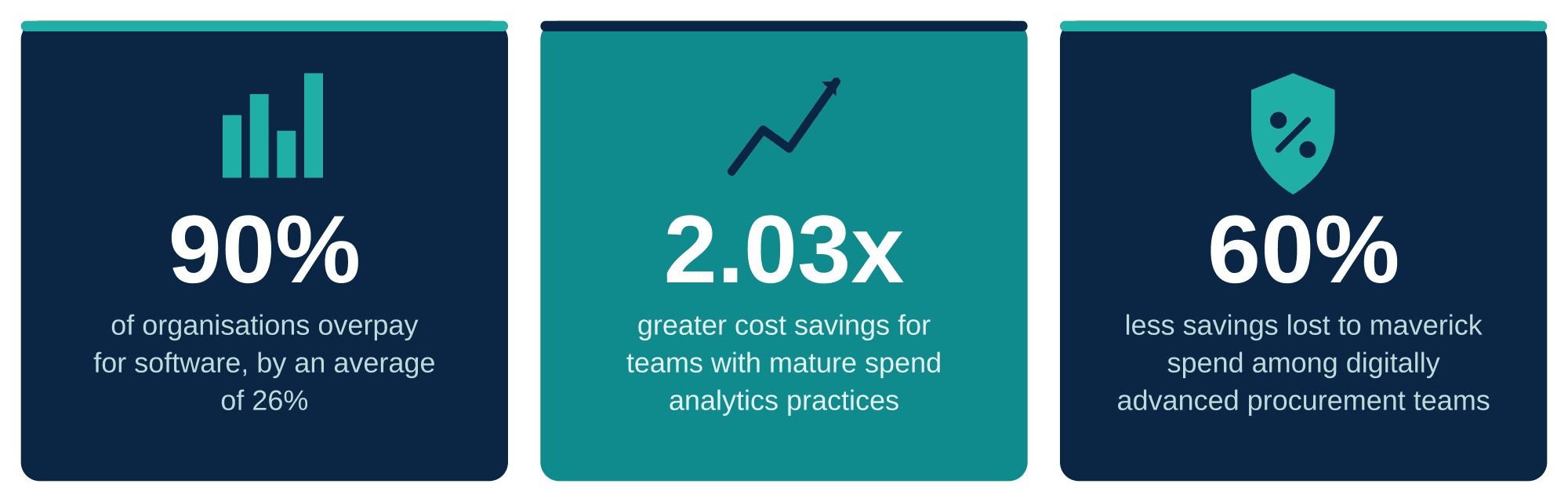
Research from Vertice found that 90% of organisations overpay for software, by an average of 26%, while software prices continue to rise by roughly 11.4% a year. Without spend visibility, this overspend simply goes unnoticed until the next budget review.
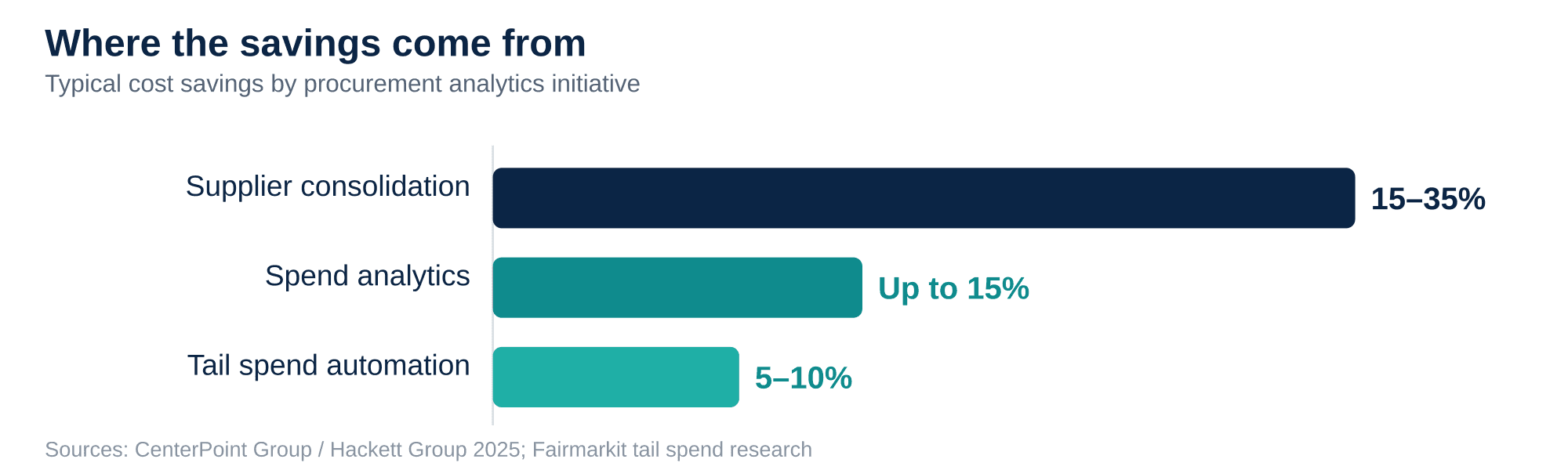
The payoff for fixing this is measurable. Procurement teams with mature spend analysis practices generate more than twice the cost savings of their peers, according to Hackett Group's 2025 Digital World Class research. The savings tend to concentrate in a few specific initiatives:
The Four Types of Procurement Analytics
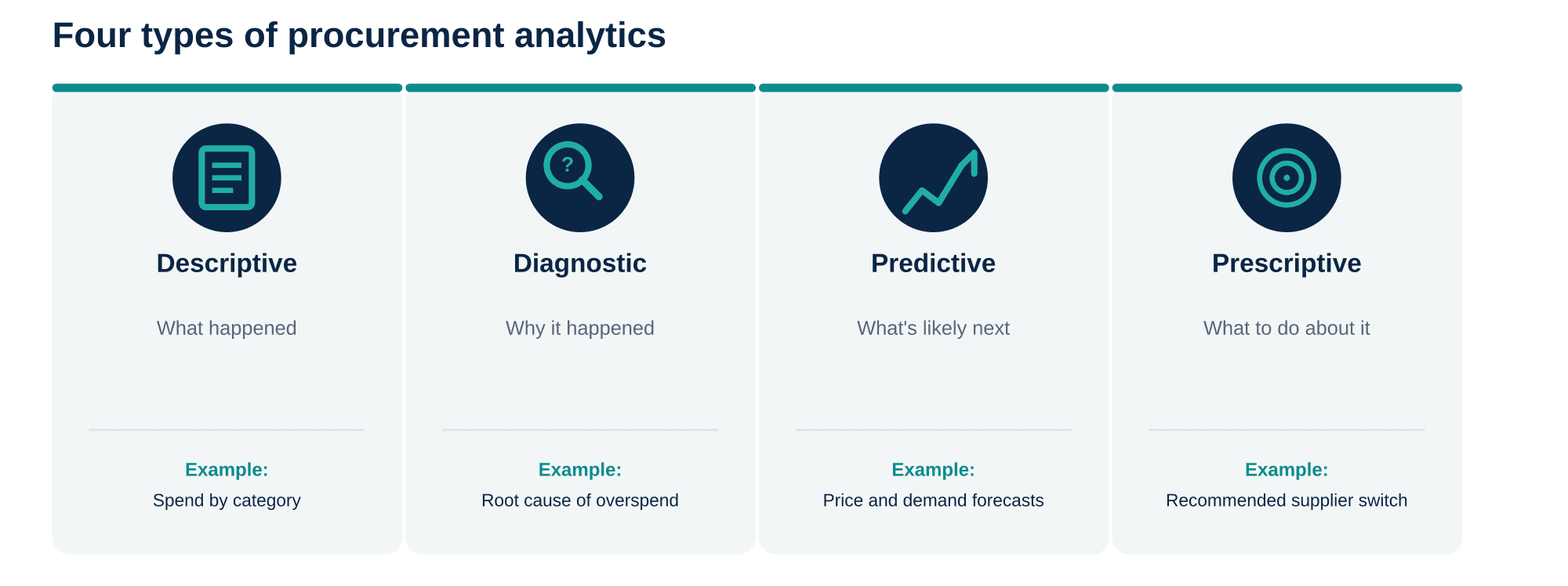
Procurement analytics is not one single technique. It builds up in layers, each one adding more value than the last:
Building a Procurement Analytics Capability
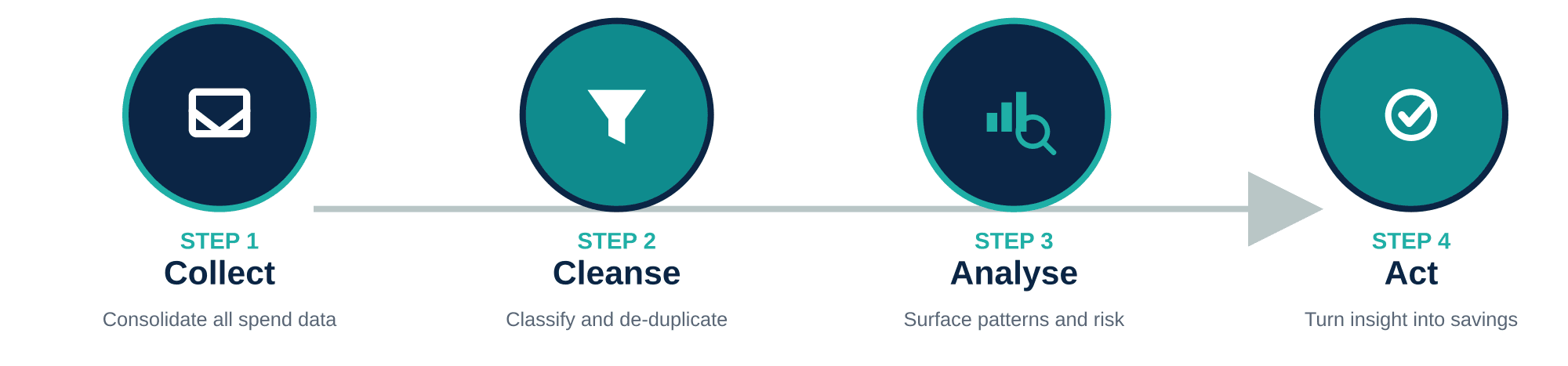
Getting from scattered spreadsheets to a working analytics function generally follows four connected stages.
1. Collect
Bring purchase orders, invoices, contracts, and card spend into a single source of truth, rather than leaving them scattered across systems and departments.
2. Cleanse
Classify and de-duplicate supplier records. Messy data is the most common reason procurement analytics projects stall before they deliver anything useful.
3. Analyse
Look for spend concentration, maverick buying, and supplier overlap. On average, just 3.5% to 8.5% of suppliers account for 80% of total spend, so the highest-value opportunities are usually concentrated in a small group.
4. Act
Turn findings into renegotiated contracts, consolidated suppliers, or blocked off-contract purchases. Digitally advanced procurement teams lose 60% less value to maverick spend than their peers, according to Hackett Group's 2025 research.
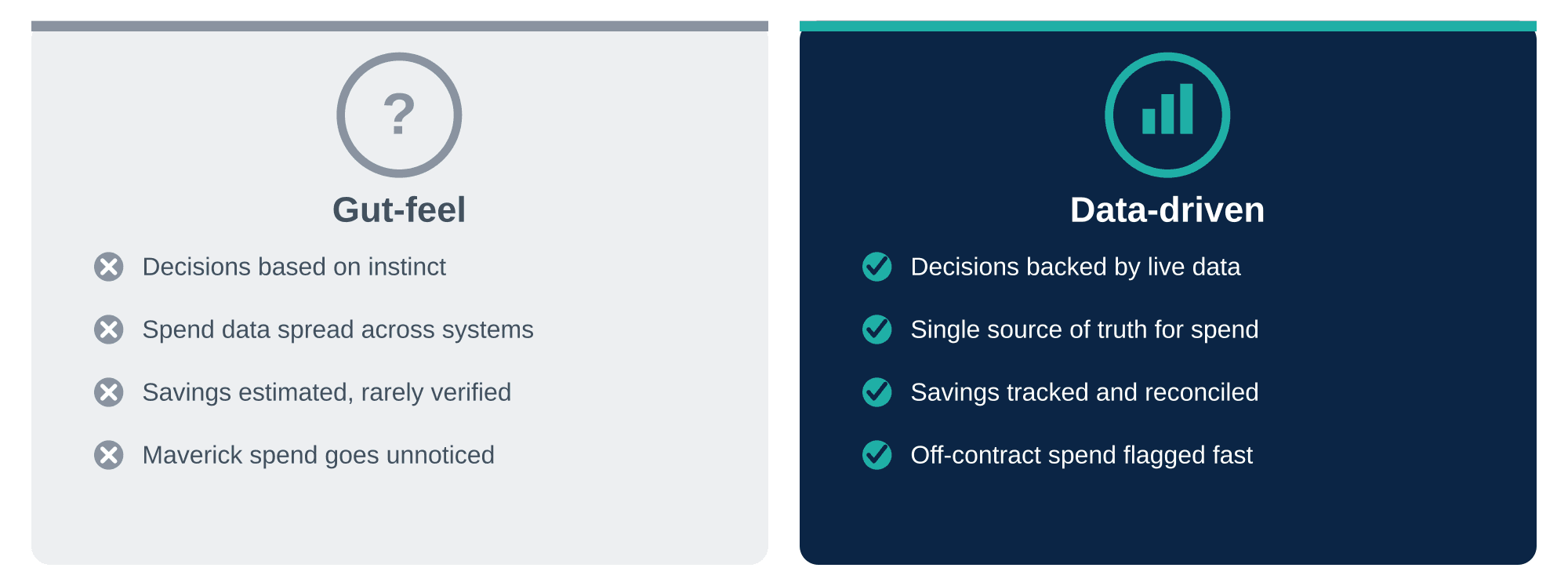
Gut-Feel vs. Data-Driven Procurement
The difference between procurement teams that consistently hit their savings targets and those that do not usually comes down to whether decisions are backed by data or by instinct.
Why UK Businesses Choose DDevices for Procurement Analytics
At DDevices, we help organisations turn scattered purchasing data into a clear, actionable view of spend. Our team works alongside procurement and finance functions to consolidate supplier data, identify savings opportunities, and build the reporting that keeps decisions grounded in fact rather than guesswork.
Our approach helps organisations:
Gain a single source of truth across suppliers, contracts, and spend.
Identify maverick spend and consolidation opportunities early.
Track savings against forecast, not just against last year's budget.
Build procurement reporting that finance and leadership actually trust.
Whether you are starting from spreadsheets or refining an existing analytics function, DDevices provides the expertise to help you make faster, better-informed procurement decisions.
Frequently Asked Questions
Procurement analytics is the process of collecting, cleaning, and analysing purchasing data to guide better buying decisions, covering spend, suppliers, contracts, and invoices.
It gives procurement and finance teams a single, trusted view of spend, helping them catch overspend, reduce maverick buying, and negotiate from a position of fact rather than guesswork.
Descriptive (what happened), diagnostic (why it happened), predictive (what is likely next), and prescriptive (what to do about it).
Savings vary by initiative. Supplier consolidation typically saves 15 to 35%, spend analytics up to 15%, and tail spend automation 5 to 10%, according to recent industry research.
Maverick spend is purchasing that happens outside approved suppliers or negotiated contracts. It is one of the most common sources of hidden overspend that analytics helps identify.
DDevices helps organisations consolidate spend data, identify savings opportunities, and build the reporting and processes needed to make procurement decisions data-driven rather than instinct-led.