
How Outsourced IT Services Improve Operational Efficiency
Every minute spent resolving recurring IT issues, responding to unexpected downtime, or managing ageing infrastructure is time taken away from innovation, customer service, and business growth. As organisations become increasingly dependent on digital technologies, operational efficiency is no longer just an internal objective, it's a competitive advantage.
Today's business leaders are expected to deliver more with fewer resources while navigating growing cybersecurity risks, supporting hybrid workforces, controlling operational costs, and adopting new technologies at pace. For many organisations, maintaining these demands with an entirely in-house IT team has become increasingly challenging.
Industry Insight:
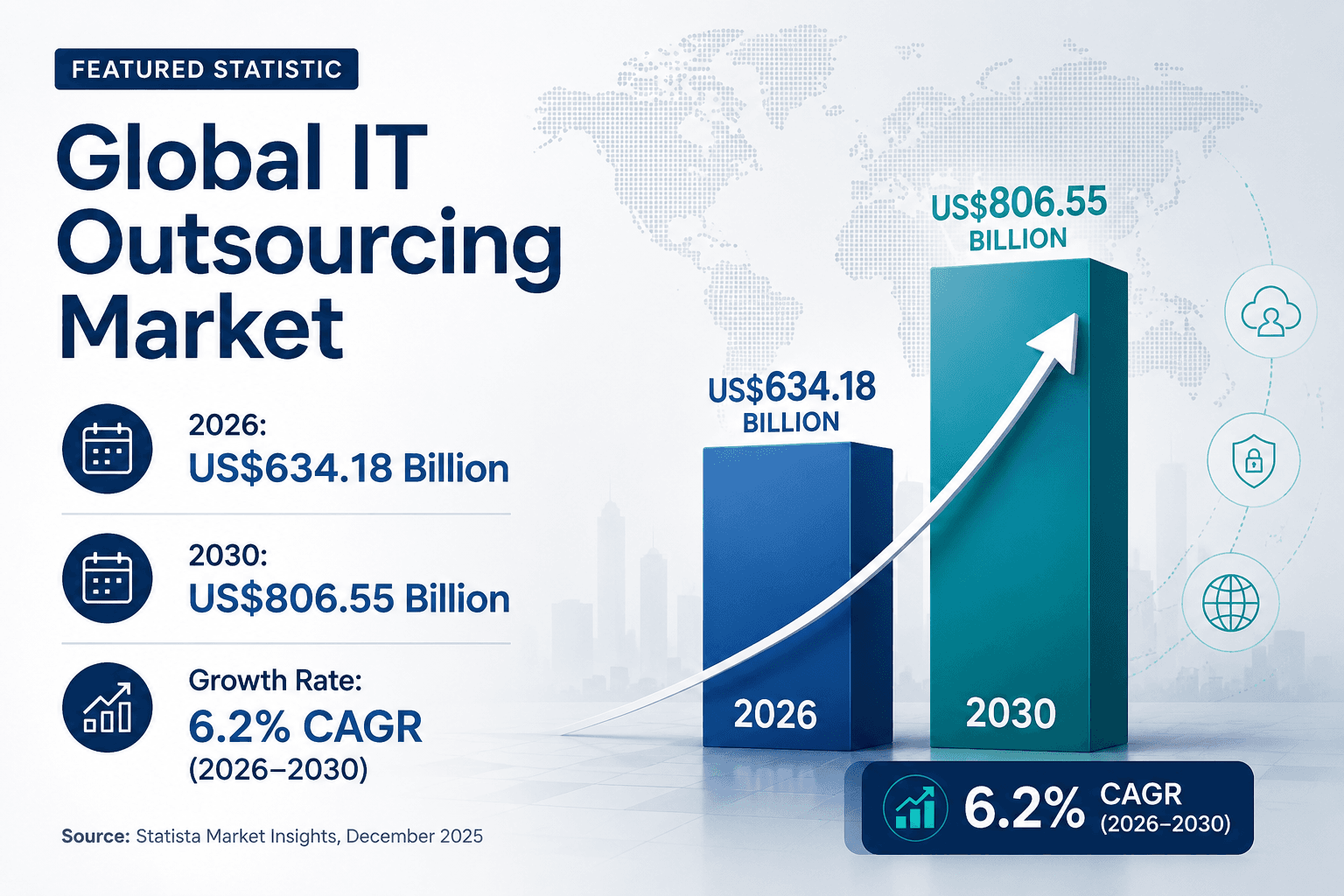
The global IT outsourcing market is projected to grow from US$634.18 billion in 2026 to US$806.55 billion by 2030, highlighting the growing reliance on specialist technology partners to improve business performance and operational resilience.
Source: Statista Market Insights (December 2025)
In this guide, we'll explore how outsourced IT services improve operational efficiency, the measurable business benefits they deliver, and why organisations across the UK continue to embrace managed IT partnerships to support sustainable growth.
What Are Outsourced IT Services?
Outsourced IT services involve partnering with a specialist technology provider to manage some or all of an organisation's IT operations. Rather than relying solely on internal resources, businesses gain access to experienced engineers, consultants, security specialists, and support teams who deliver services under agreed service levels.
Depending on business requirements, outsourced IT services may include:
- Managed IT support
- Cloud services and migration
- Cybersecurity and compliance
- Network monitoring
- Infrastructure management
- Microsoft 365 management
- Backup and disaster recovery
- Device lifecycle management
- IT procurement
- Strategic IT consultancy
Unlike the traditional "break-fix" model, modern managed services focus on preventing issues before they affect users. Continuous monitoring, proactive maintenance, and strategic planning help minimise disruption while improving overall business performance.
Why Operational Efficiency Matters
Operational efficiency is about enabling people, systems, and processes to perform at their best while using resources effectively. Every delay caused by slow devices, network outages, cybersecurity incidents, or overloaded IT teams impacts productivity and ultimately affects profitability.
As organisations continue to digitise operations, IT has become central to almost every business function, from collaboration and finance to customer service and supply chain management. Reliable technology is no longer just an operational necessity; it is a competitive advantage.
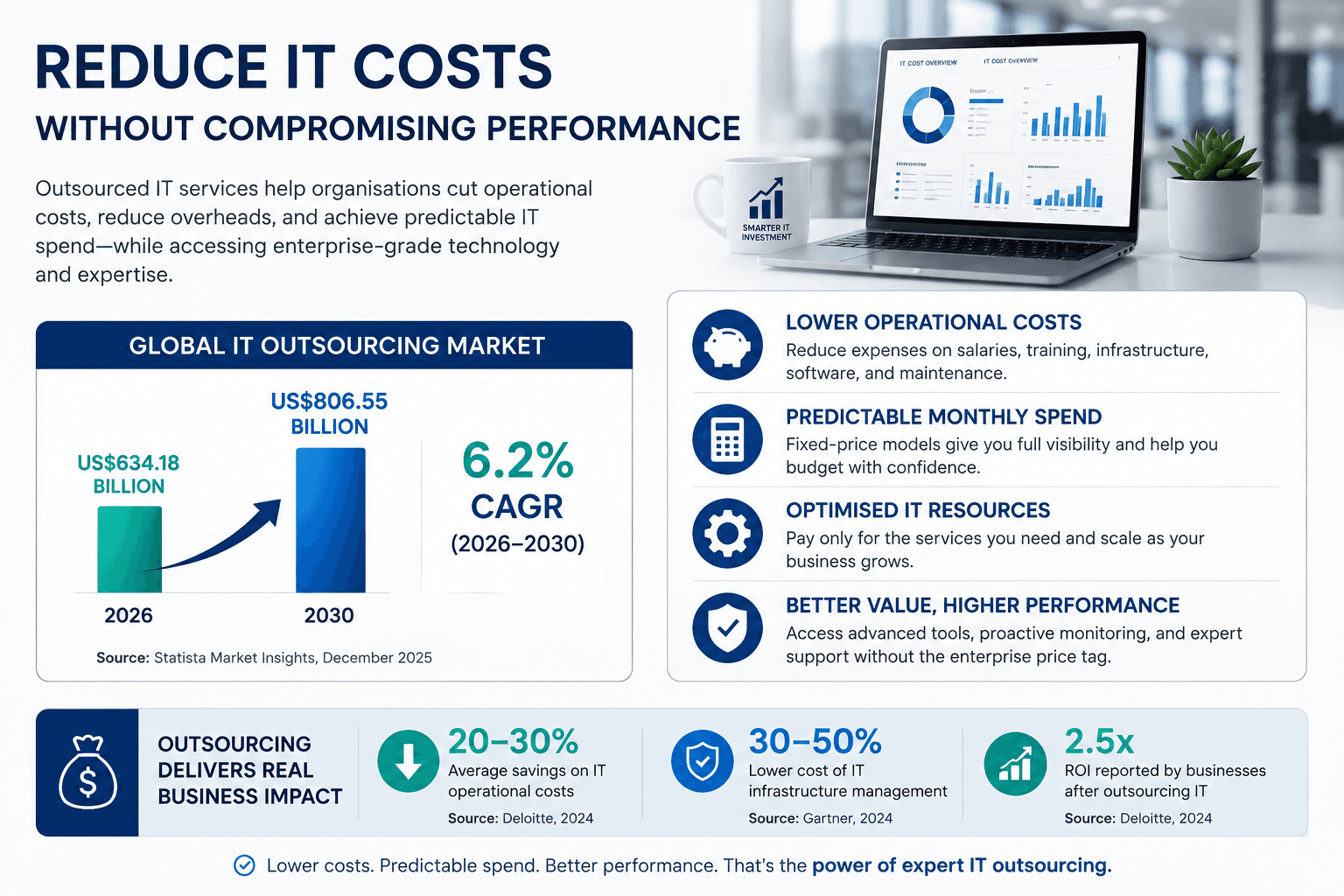
Managing an in-house IT department requires significant ongoing investment. Beyond salaries, organisations must budget for recruitment, training, certifications, software licensing, hardware refreshes, monitoring tools, and emergency support.
Outsourced IT services replace many of these unpredictable costs with a transparent service agreement, allowing organisations to budget more effectively while accessing enterprise-level expertise.
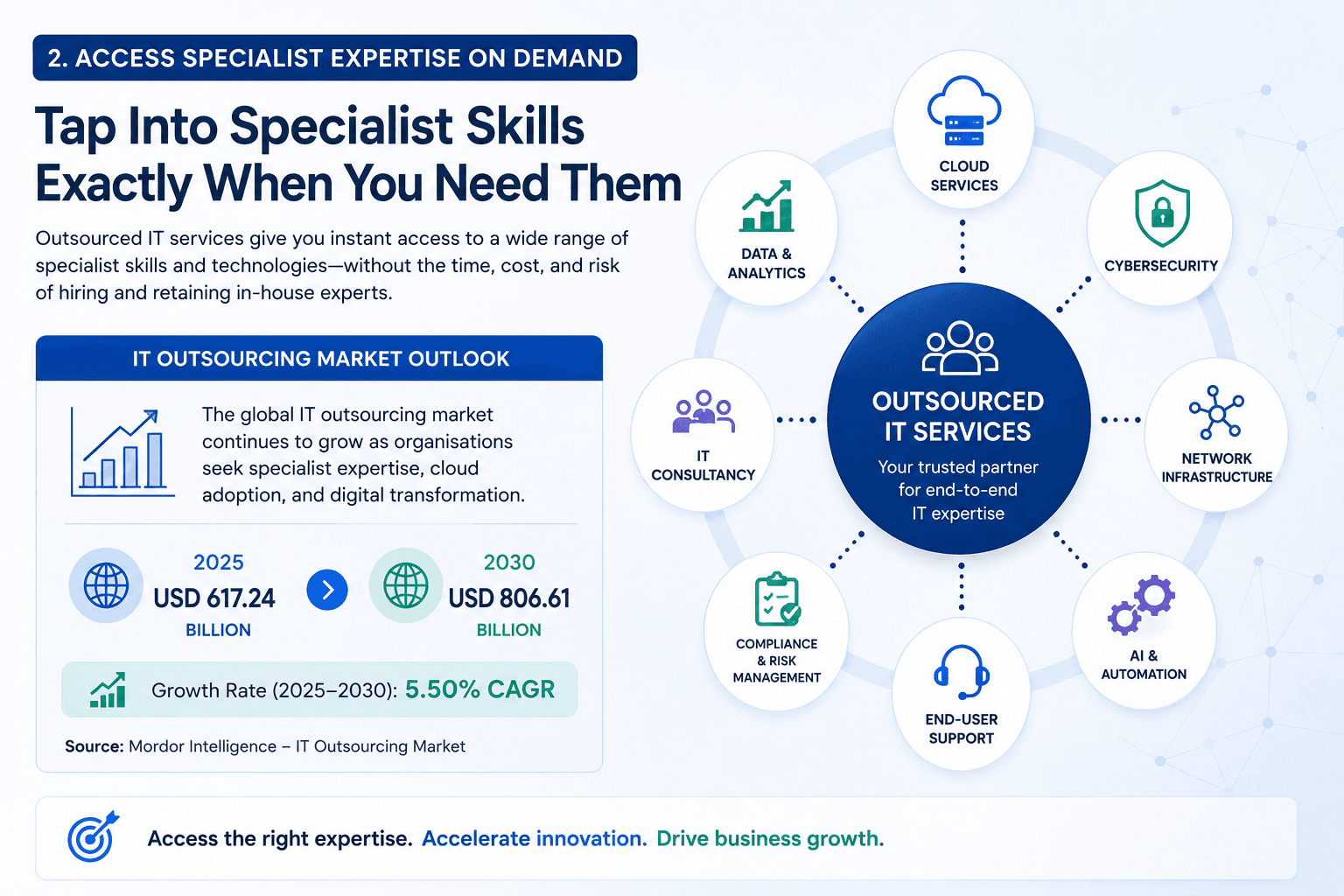
Technology evolves faster than most organisations can recruit or train internal teams. Cloud platforms, cybersecurity regulations, AI solutions, Microsoft technologies, and networking continue to advance, making it increasingly difficult to maintain expertise across every discipline.
Outsourced IT providers invest continuously in specialist skills, certifications, and emerging technologies, allowing organisations to benefit from experienced professionals whenever required.
Rather than hiring multiple specialists internally, businesses gain flexible access to expertise that scales with changing priorities.
IT issues rarely appear without warning. Performance degradation, storage limitations, hardware failures, and security vulnerabilities often develop gradually before causing major disruption.
Modern managed service providers use proactive monitoring tools that continuously assess infrastructure performance, identify anomalies, and resolve many issues before users are even aware they exist.
Reducing unplanned downtime delivers benefits far beyond the IT department. Employees remain productive, customer-facing systems stay available, and operational disruption is significantly reduced.
Cybersecurity is now one of the biggest operational risks facing organisations of every size. As businesses embrace hybrid working, cloud services, and connected devices, the attack surface continues to expand.
According to industry research, cyber threats continue to increase while organisations face an ongoing shortage of experienced cybersecurity professionals. For many businesses, maintaining specialist security capabilities internally is becoming increasingly difficult.
Outsourced IT providers help strengthen organisational resilience through services such as:
- Continuous security monitoring
- Endpoint protection
- Multi-factor authentication
- Vulnerability management
- Security patching
- Compliance support
- Backup and disaster recovery
Business growth brings new challenges. Expanding into new locations, onboarding employees, adopting cloud platforms, or integrating new technologies all place additional pressure on internal IT teams. Without the right support, growth can quickly become difficult to manage.
Outsourced IT services provide the flexibility to scale technology resources in line with business requirements. Whether you're adding ten employees or opening multiple offices, your IT partner can rapidly deploy devices, provision user accounts, strengthen security controls, and maintain consistent service levels without disrupting day-to-day operations.
Many internal IT departments spend the majority of their time responding to support tickets, software updates, password resets, and infrastructure maintenance. While these tasks are essential, they often prevent skilled IT professionals from contributing to initiatives that drive business growth.
By outsourcing routine operational activities, organisations allow internal teams to concentrate on higher-value projects such as digital transformation, business process automation, cloud strategy, AI adoption, cybersecurity planning, and innovation.
Hybrid working has fundamentally changed how organisations deliver IT support. Employees now expect secure access to applications, collaboration tools, and business systems regardless of their location.
Outsourced IT providers help organisations maintain consistent user experiences through proactive monitoring, remote support, cloud-based device management, identity and access management, and endpoint security.
Whether employees work from the office, home, or multiple locations, organisations can maintain productivity while reducing the burden on internal support teams.
Reliable remote support also improves employee satisfaction by ensuring issues are resolved quickly without unnecessary disruption.
Digital transformation is no longer limited to large enterprises. Organisations of every size are investing in cloud computing, automation, AI, analytics, and modern workplace technologies to improve efficiency and remain competitive.
However, implementing these technologies requires specialist expertise that many organisations cannot maintain internally.
Outsourced IT services provide access to experienced consultants, solution architects, and technical specialists who can plan, implement, and optimise digital transformation initiatives while reducing project risks.
Frequently Asked Questions
Outsourced IT services involve partnering with a third-party provider to manage IT functions such as infrastructure, cybersecurity, cloud services, technical support, and strategic technology planning.
They reduce downtime, improve system performance, provide specialist expertise, strengthen cybersecurity, streamline IT operations, and allow internal teams to focus on strategic priorities.
Yes. Managed IT services provide SMEs with enterprise-level expertise and technology support without the cost of building large internal IT departments.
Common outsourced IT services include managed IT support, cloud management, cybersecurity, network monitoring, Microsoft 365 administration, backup and disaster recovery, IT procurement, infrastructure management, and IT consultancy.
Look for a provider with proven industry experience, strong security credentials, transparent SLAs, proactive monitoring capabilities, scalable services, and a track record of supporting organisations with similar operational requirements.
Conclusion
Operational efficiency is no longer achieved simply by reducing costs. It depends on creating an IT environment that enables employees to work productively, supports business growth, strengthens cybersecurity, and adapts to changing technology demands.
Outsourced IT services provide organisations with the expertise, scalability, and proactive support needed to achieve these objectives without the complexity of managing every function internally.
As organisations continue investing in cloud technologies, digital transformation, and cyber resilience, outsourcing has evolved from a tactical decision into a long-term business strategy.