
Top 8 IT Procurement Challenges 2026 and How to Overcome Them
What if the biggest threat to your company's next technology investment isn't the technology itself. For many businesses, the greatest risks arise long before a solution is deployed. Choosing the wrong supplier, overlooking long-term costs, or investing in technology that cannot scale with the business can lead to unnecessary expenditure, operational disruption, and missed growth opportunities.
This article explores the most common IT procurement challenges facing modern businesses and shares practical strategies to overcome them. Whether you're reviewing your IT Procurement Services strategy, investing in IT Infrastructure Solutions, expanding your Cloud Solutions, or strengthening your Software Asset Management (SAM) practices, understanding these challenges is the first step towards building a resilient, cost-effective, and future-ready technology environment.
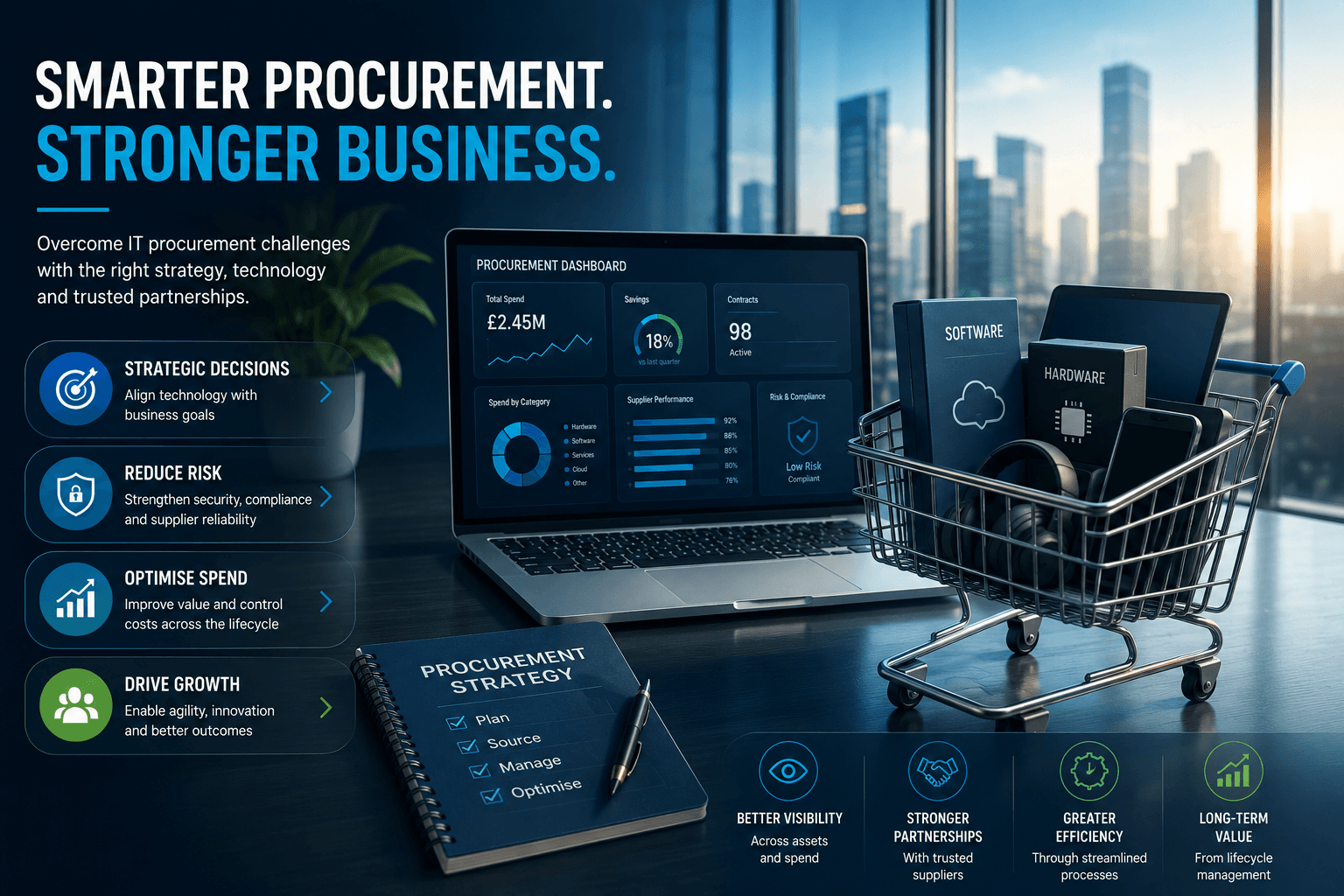
Why IT Procurement Has Become More Complex Than Ever
Not long ago, IT procurement was often viewed as a straightforward purchasing function. Organisations identified a business requirement, compared a handful of suppliers, negotiated pricing, and placed an order.
While commercial considerations were always important, procurement decisions were generally limited to selecting the right product at the right price within an approved budget.
Licensing and subscription-based technology have also transformed procurement. Many organisations now operate across a combination of perpetual licences, Software as a Service (SaaS), cloud consumption models, and hybrid infrastructure.
The scale of this transformation is reflected in market investment. Gartner projects worldwide end-user spending on public cloud services will exceed $720 billion in 2025, highlighting how organisations are increasingly managing complex cloud ecosystems rather than one-off technology purchases.
The Most Common IT Procurement Challenges
Every organisation has its own procurement priorities, budgets, and operational requirements. However, despite these differences, many businesses encounter the same procurement challenges when investing in new technology.
Left unresolved, these issues can increase operational costs, delay strategic projects, introduce security risks, and reduce the return on technology investments.
Below are some of the most common IT procurement challenges organisations face today and the practical approaches used to overcome them.
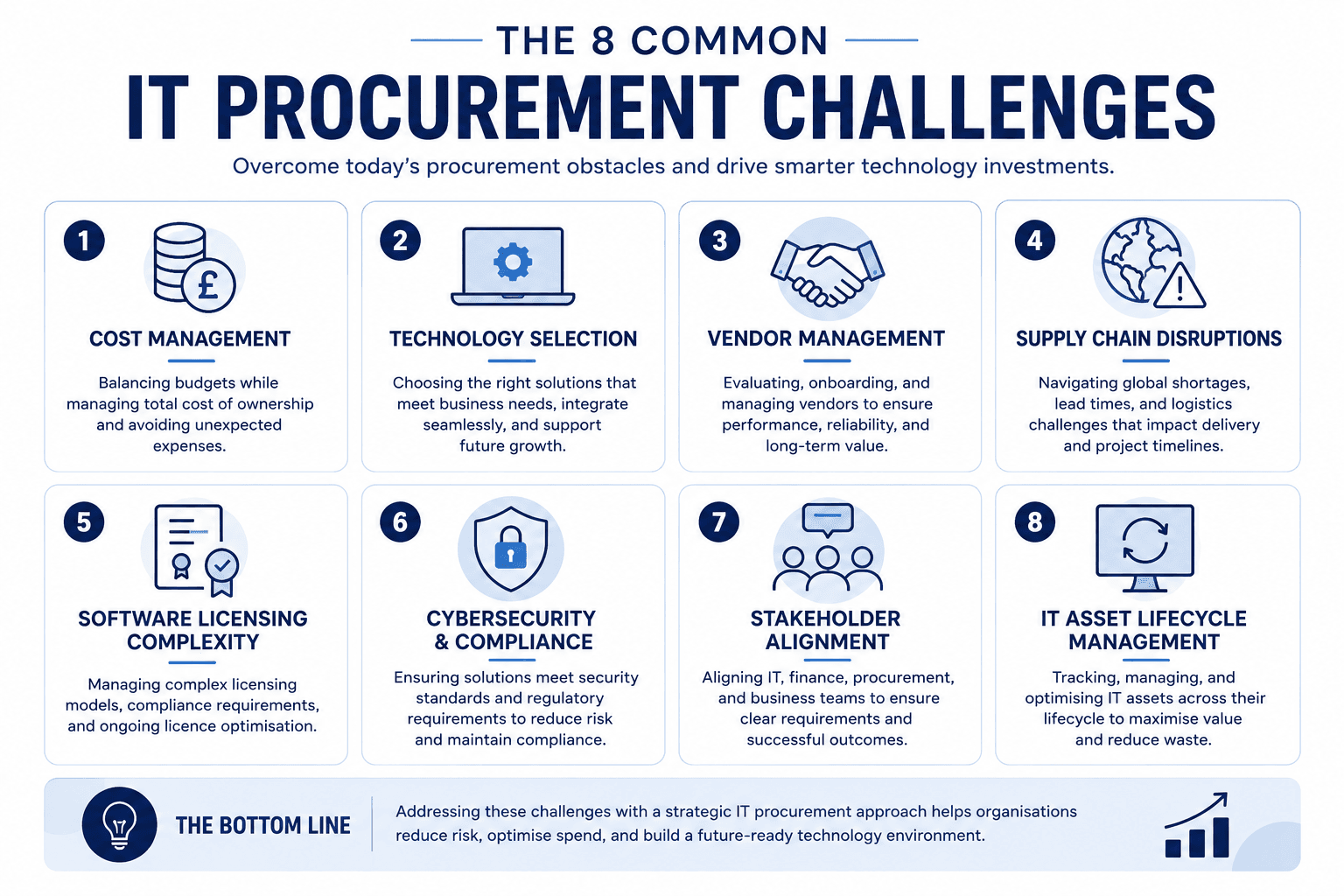
1. Balancing Cost with Long-Term Business Value
One of the most common procurement mistakes is focusing almost entirely on the purchase price. While controlling costs is an essential part of every procurement strategy, selecting technology solely because it is the cheapest option can create far greater costs over time.
Lower-cost hardware may have shorter product lifecycles, software may lack the functionality required to support future business growth, and suppliers competing on price alone often provide limited post-sales support or warranty services.
What initially appears to be a cost saving can quickly become an expensive operational issue through unexpected upgrades, compatibility challenges, maintenance costs, or premature replacement.
2. Selecting Technology That Meets Both Current and Future Business Needs
Technology evolves rapidly, and procurement decisions made today can influence business performance for many years. One of the biggest challenges organisations face is selecting solutions that satisfy immediate operational requirements while remaining flexible enough to support future growth.
Future-ready procurement begins with understanding business strategy rather than simply responding to immediate technical requirements. Procurement teams should work closely with IT leaders and business stakeholders to assess scalability, interoperability, vendor roadmaps, and the ability of new solutions to integrate with existing infrastructure.
3. Managing Multiple Vendors and Supplier Relationships
As organisations expand their technology estates, they often accumulate an increasing number of hardware manufacturers, software vendors, cloud providers, distributors, and managed service providers. While specialist suppliers may deliver expertise within individual areas, managing numerous vendor relationships can quickly become both operationally and commercially challenging.
Multiple suppliers also make it more difficult to maintain visibility across technology investments. Duplicate software purchases, overlapping services, inconsistent support arrangements, and fragmented procurement processes frequently lead to unnecessary expenditure and operational inefficiencies.
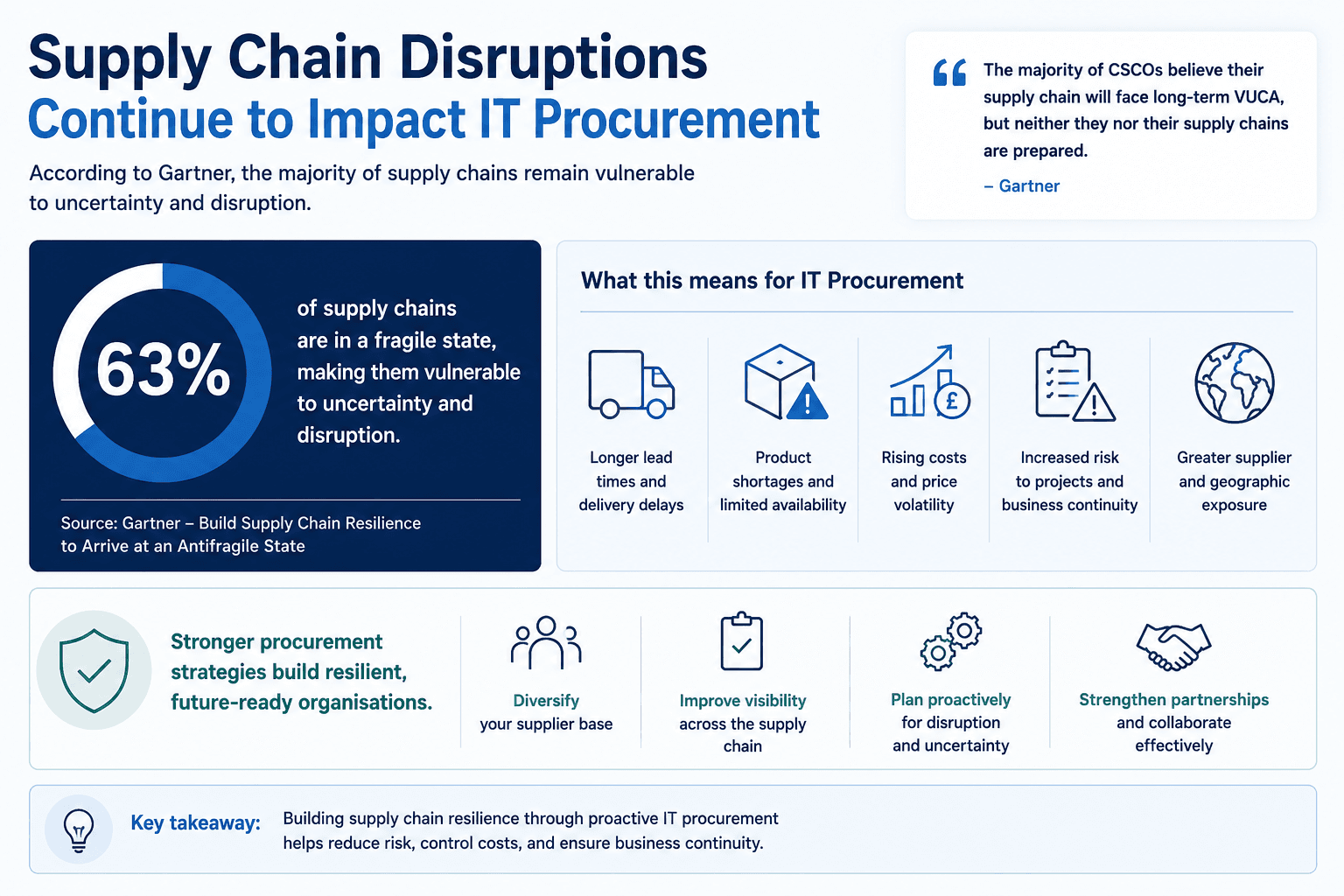
4. Navigating Supply Chain Disruptions and Product Availability
Recent global events have demonstrated how vulnerable technology supply chains can become. Recent research reinforces the scale of the challenge. According to Ofcom's Post Monitoring Report, 27% of UK parcel recipients experienced delivery issues, highlighting the ongoing pressures affecting logistics and product availability. At the same time, Deloitte's 2023 Global Chief Procurement Officer Survey found that only 25% of organisations can effectively identify and predict supply disruptions, making proactive procurement planning more important than ever.
For organisations planning infrastructure upgrades, office relocations, digital transformation programmes, or device refresh projects, unexpected procurement delays can postpone business initiatives by weeks or even months.
According to Gartner, improving supply chain resilience has become a strategic priority for organisations seeking to minimise disruption and maintain operational continuity. This means procurement teams must consider supplier reliability, inventory availability, lead times, and contingency planning alongside traditional commercial factors such as pricing.
5. Managing Software Licensing and Subscription Complexity
The shift towards cloud computing and Software as a Service (SaaS) has transformed how organisations purchase and consume technology. While subscription-based licensing offers greater flexibility and scalability, it has also introduced new procurement challenges that many businesses underestimate.
Today, organisations often manage hundreds or even thousands of software licences across multiple vendors, each with different pricing structures, renewal dates, user entitlements, and compliance requirements.
6. Meeting Cybersecurity, Compliance and Regulatory Requirements
Every technology purchase has implications beyond functionality and cost. It also influences an organisation's security posture, regulatory compliance, and overall risk profile.
Procurement decisions that fail to consider these factors can expose businesses to cyber threats, operational disruption, and potential legal or financial consequences.
Modern IT environments must comply with an increasing range of security standards, industry regulations, and data protection requirements.
Whether adopting cloud services, deploying endpoint devices, or investing in networking infrastructure, organisations must evaluate suppliers based on their ability to meet recognised security frameworks and compliance obligations.
7. Aligning Procurement with Business and IT Stakeholders
Successful IT procurement rarely depends on procurement teams alone. Technology investments affect multiple departments across an organisation, each with its own priorities, expectations, and operational requirements.
Without effective collaboration, procurement projects can become delayed, over budget, or fail to deliver the intended business outcomes.
IT teams may focus on technical compatibility and performance, finance departments prioritise budget control, procurement professionals negotiate commercial terms, while operational teams concentrate on usability and business continuity.
8. Planning for the Entire IT Asset Lifecycle
Many organisations focus heavily on acquiring new technology but give considerably less attention to what happens after deployment.
However, procurement does not end when equipment is delivered or software is installed. Every technology investment requires ongoing management throughout its operational lifecycle.
Poor lifecycle management can also result in avoidable financial and security risks. Research shows that 71% of HR professionals have experienced at least one departing employee failing to return company equipment, while remote employees are 17% more likely to retain company devices than office-based staff. These findings highlight why asset tracking, recovery processes, and lifecycle planning should form part of every procurement strategy.
Effective lifecycle planning begins during procurement. Organisations should evaluate not only the products they intend to purchase but also the long-term support available, upgrade paths, maintenance requirements, vendor roadmaps, and end-of-life considerations.
How DDevices Helps Organisations Overcome Procurement Challenges
DDevices works with organisations across the public and private sectors to simplify complex procurement requirements. From initial consultation and preparation to sourcing, deployment, ongoing support, and technology refresh programmes, our approach is designed to reduce complexity while maximising the value of every technology investment.
Our procurement specialists work closely with organisations to:
- Develop procurement strategies aligned with business objectives.
- Source hardware and software from leading global technology vendors.
- Optimise technology spend without compromising performance or quality.
- Simplify vendor management through a single trusted procurement partner.
- Support IT Asset Management, Software Asset Management (SAM), and IT Lifecycle Services to maximise long-term return on investment.
Whether your organisation is planning an infrastructure refresh, expanding cloud capabilities, strengthening cybersecurity, or supporting digital transformation initiatives, DDevices provides the expertise and commercial guidance needed to make procurement more efficient, resilient, and future-ready.
Final Thoughts
Technology procurement has become a strategic business function rather than a transactional purchasing activity. Every procurement decision influences operational performance, cybersecurity, financial efficiency, and an organisation's ability to adapt to future business demands.
While challenges such as budget pressures, supplier complexity, software licensing, and supply chain disruption are common, they can be successfully managed through structured planning, effective governance, and a long-term procurement strategy.
By taking a strategic approach to procurement and working with experienced technology partners, organisations can reduce risk, optimise technology investments, and build an IT environment that supports sustainable business growth.
If you're looking to strengthen your procurement strategy or simplify the way your organisation acquires and manages technology, the specialists at DDevices are here to help.