
IT Asset Lifecycle Management: 6 Common Challenges and How to Overcome Them
Buying technology is easy. Knowing where it is, who has it and whether it is still safe to use a year later is where most businesses lose track.
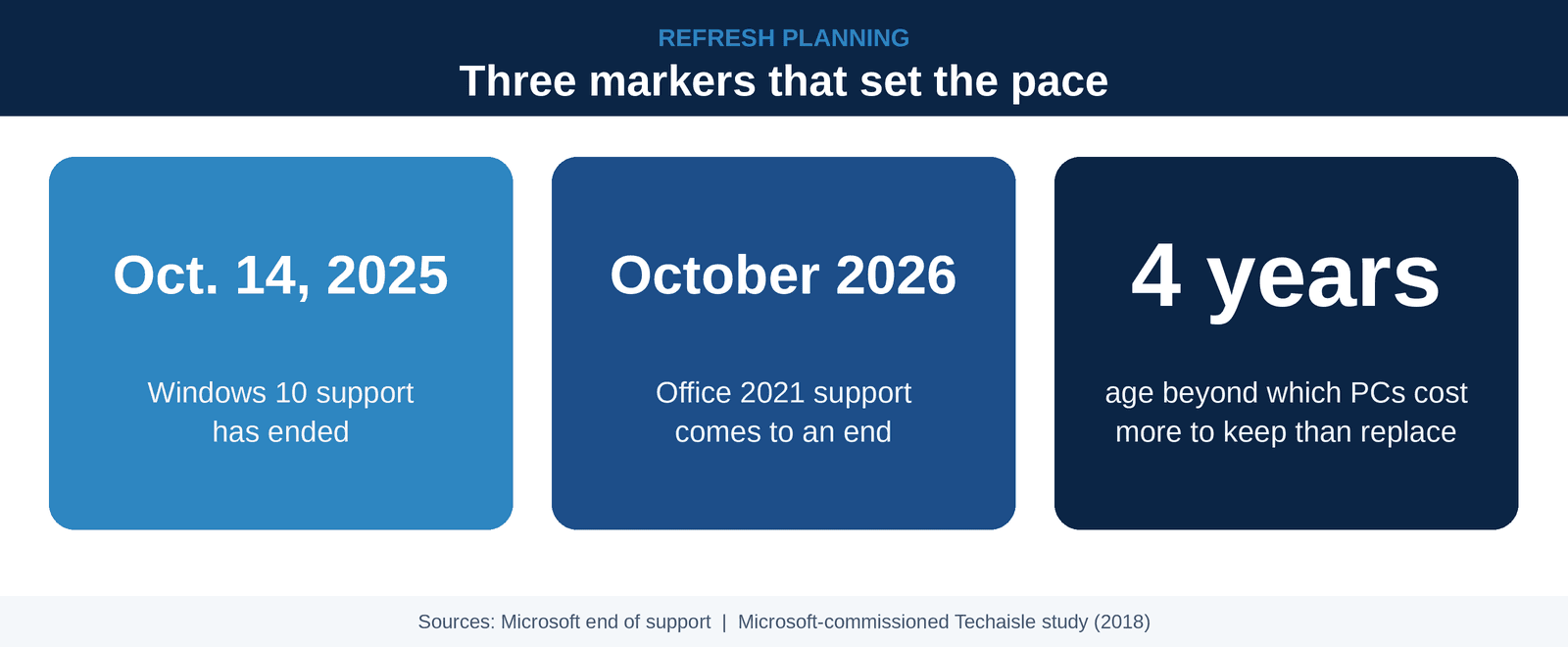
The deadlines are already here. Support for Windows 10 ended on Oct. 14, 2025, and Office 2021 loses support on Oct. 13, 2026, according to Microsoft. Every business still running either needs to know where they are and what replaces them.
This guide explains what IT asset lifecycle management is, the six challenges that catch most businesses out and how to overcome each one.
What is IT asset lifecycle management?
IT asset lifecycle management is the practice of tracking every technology asset, and the cost, risk and contract attached to it, from the day you decide to buy it to the day it is securely retired. It covers hardware, software, cloud and SaaS, not just laptops.
Three terms often get mixed up. IT asset management (ITAM) is the discipline of knowing what you own and what it costs. IT asset lifecycle management applies that discipline stage by stage, from purchase to disposal. A configuration management database (CMDB) records your assets and how they depend on each other.
It helps to picture two versions of your estate. The record is what your spreadsheet or tool says you own. The reality is what is actually on desks, in cupboards and in the cloud. Every challenge in this guide comes from the gap between the two, and most businesses trust the record and never test it.
Why asset lifecycle management is harder in 2026
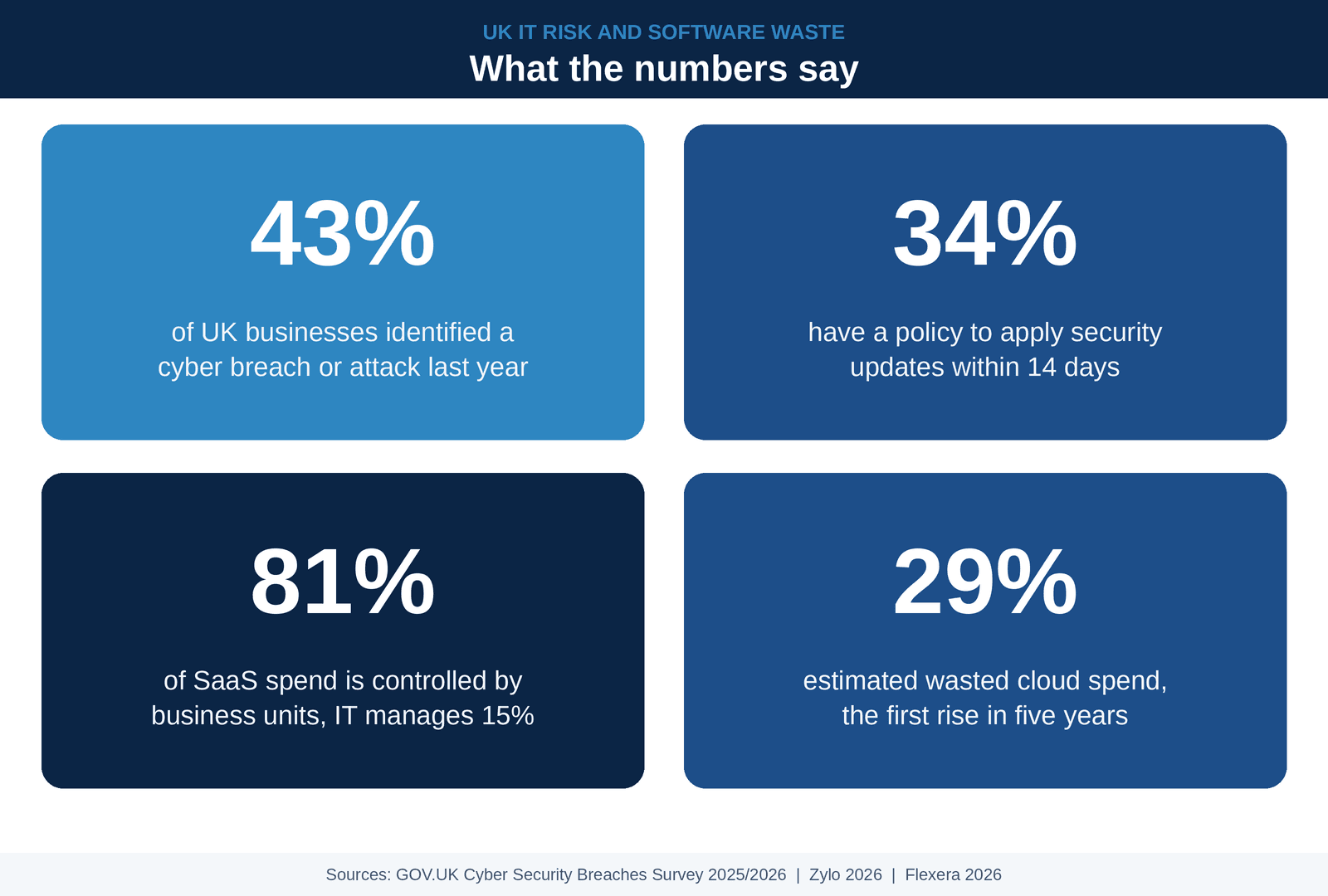
The estate is growing in places IT cannot easily see. Flexera's 2026 State of ITAM Report, a global survey of 512 professionals, found that only 36% of organisations report complete visibility of their IT assets, down seven points in a year. AI is the widest blind spot: only 31% say they have accurate visibility into AI software, and 59% say wasted AI spend rose (Flexera).
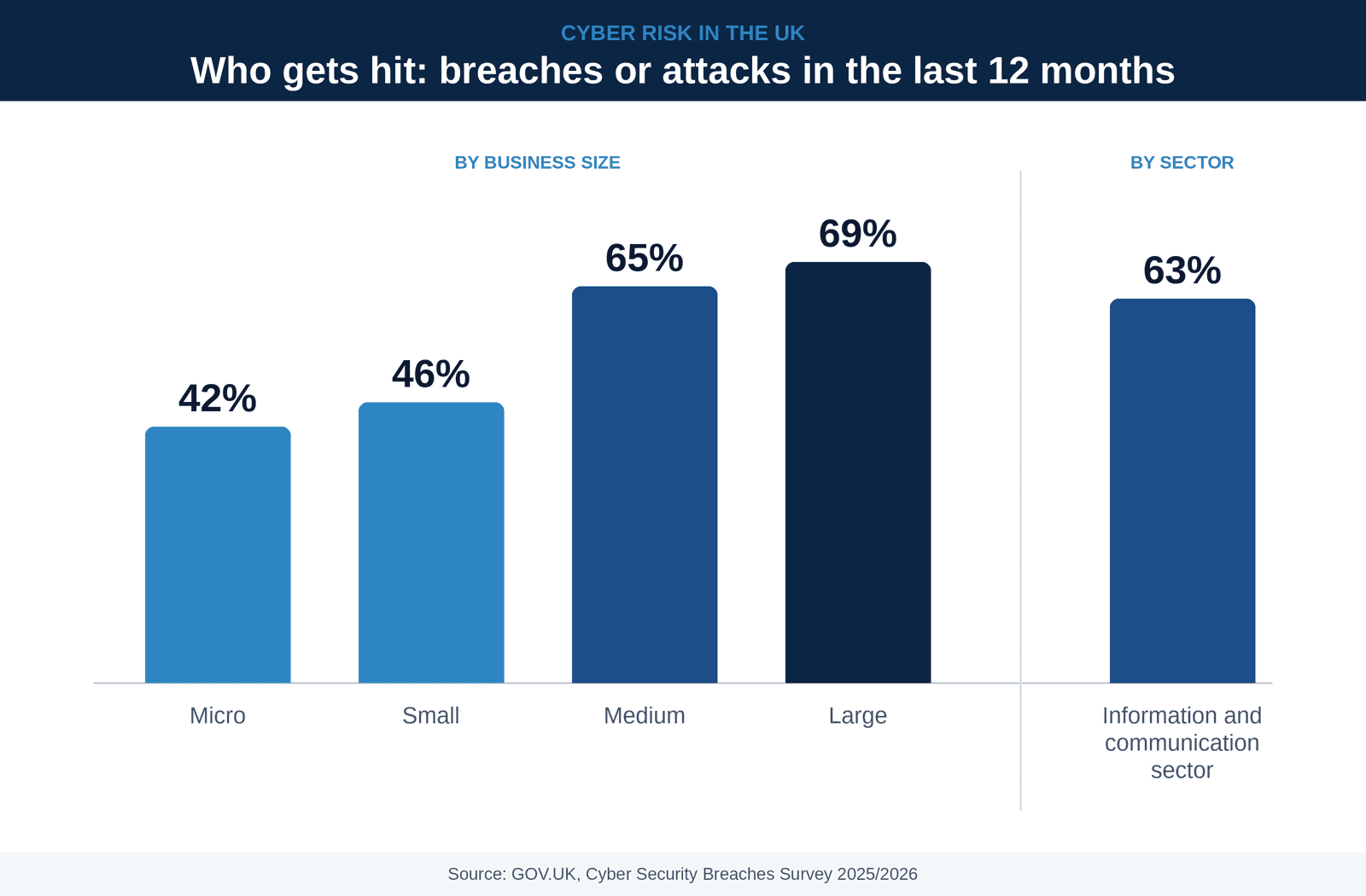
The UK picture shows similar gaps. In the Cyber Security Breaches Survey 2025/2026, 66% of businesses only allow access from organisation-owned devices and 61% apply security controls to them. Only 34% have a policy to apply security updates within 14 days, and just 18% carried out a vulnerability audit in the last year.
Software adds a cost problem. Zylo's 2026 SaaS Management Index found organisations leave an average of 36% of SaaS licences unused against recommended levels, and expense-based SaaS spend rose 267% in a year.
Hardware and software also age on fixed dates. Office 2021 ends on Oct. 13, 2026 with no extended security updates. Businesses can buy Windows 10 Extended Security Updates for up to three years, but that is a bridge, not a plan.
The six challenges of IT asset lifecycle management
Every business meets the same six challenges. Each one is a gap between the record and the reality, and each has a practical fix.
1. Poor asset visibility
You cannot manage what you cannot see. Devices are bought on cards, left in drawers after people leave, and licences appear without a ticket. The spreadsheet drifts and nobody trusts it.
How to overcome it. Run automated discovery so the record updates itself, then reconcile it against purchase and finance data every quarter. Give every asset a named owner and status, and spot-check a sample against the physical estate each year. Track one number: the share of discovered assets missing from your record.
2. Shadow IT and AI sprawl
Teams buy what they need, fast. In the UK survey, only 22% of businesses said cyber security weighed heavily when buying software, and 12% said it did not weigh at all.
How to overcome it. Offer one simple intake route for every new app, device and subscription, and make it faster than going round it. Review expense and card data monthly. Publish an approved catalogue and add a short AI-use policy so new tools are recorded from day one. Our end-to-end procurement guide covers buying to a standard.
3. Patching gaps and end-of-support deadlines
Unsupported and unpatched assets are the easiest to attack. Patch management is one of the five controls in Cyber Essentials, yet only 34% of UK businesses have a 14-day update policy. Ageing kit that cannot take the next version turns every deadline into an emergency purchase.
How to overcome it. Keep one calendar of support end dates and work back from each. Set a patch window and measure it. Plan refresh by role and budget a year ahead. Many businesses pair this with managed services and cyber security support.
4. Licence waste and audit risk
Paying for unused software is one risk. Being unable to prove your entitlement is the other. In Flexera's global survey, 48% were audited by a software vendor in the last year, 44% spent over $1 million on audits across three years, and Microsoft was the most frequent auditor at 64%.
How to overcome it. Review usage quarterly and reclaim quiet seats. Keep proof of purchase, licence terms and assigned users in one place so an audit is a report, not a scramble. Renew on your terms, not the supplier's auto-renewal date.
5. Insecure retirement
Retirement is where risk hides. Under UK GDPR your business must keep personal data secure, including on devices at the end of their life, and the ICO's maximum fine is £17.5 million or 4% of worldwide turnover, whichever is higher. In one well-known older case, the ICO fined an NHS trust £325,000 after decommissioned hard drives were sold on an internet auction site.
How to overcome it. Make retirement a checklist. Use certified erasure, control chain of custody and remove the asset from every record. Ask for two records: a certificate of data erasure as your evidence for the data duty, and a recycling record with a waste transfer note for your duty under the WEEE Regulations.
6. Siloed ownership
IT holds one list, finance another and procurement a third. Nobody owns the whole lifecycle, so decisions rest on partial data. Zylo warns that organisations without clear intake and ownership will struggle to keep pace with new applications.
How to overcome it. Name one owner for the whole lifecycle and give IT, finance and procurement the same record. Hold a short monthly review of renewals, refresh dates and retirements. Track three numbers: assets with a named owner, records verified in the last 90 days, and renewals actioned before the notice date.
What these challenges cost
The figures below show where money and risk leak when nobody owns the whole lifecycle.
| Area | What the data shows | Source |
|---|---|---|
| Visibility | Only 36% report complete IT asset visibility, down 7 points in a year | Flexera, 2026 |
| Idle software | Organisations leave 36% of SaaS licences unused against recommended levels | Zylo, 2026 |
| Audit exposure | 44% spent over $1 million on software audits across three years | Flexera, 2026 |
| Patching | Only 34% of UK businesses have a 14-day update policy | GOV.UK, 2026 |
| Extended support | Windows 10 ESU costs US$61 per device in year one, $122 in year two, $244 in year three | Microsoft Q&A |
| E-waste | Only 22.3% of the 62 billion kg of e-waste generated worldwide in 2022 was documented as formally collected and recycled | ITU, 2024 |
Spreadsheet, ITAM tool or lifecycle partner?
No single approach fits every business. This comparison shows where each works best.
| Factor | Spreadsheet | ITAM software | Lifecycle partner |
|---|---|---|---|
| Best for | Small, stable estates | Teams with in-house IT capacity | Growing estates and physical work such as deployment and disposal |
| Visibility | Manual, quickly out of date | Automated discovery if well configured | One record from purchase to retirement |
| Effort to maintain | High, relies on one person | Medium, needs an owner and clean data | Low for you |
| Compliance proof | Whatever you record by hand | Reports and audit trail | Erasure and recycling certificates supplied |
| Cost pattern | Staff time | Licence fee plus admin time | Service fee tied to scope |
Many teams combine a tool with a partner. They keep policy in-house and hand the physical, repeatable work to someone else.
Six questions to test your asset lifecycle
Ask your team these before you buy any tools:
- Can we list every device, licence and subscription we own, and who uses each?
- When did we last check the record against what is actually in use?
- Do we know the support end date for every operating system and application?
- Who approves a new app or subscription, and how would we know if it was skipped?
- Do we hold an erasure certificate and recycling record for every device retired this year?
- Who owns the whole lifecycle, and do IT, finance and procurement share one record?
If you cannot answer three or more with confidence, start with challenge one.
Why UK businesses choose DDevices
t DDevices, we make technology procurement the easiest part of your day, and we stay with you long after the purchase order. From expert licensing advice and sourcing to deployment, support and optimisation, our IT lifecycle services simplify every stage for UK businesses, so nothing you own goes untracked.
One partner. One record for every asset. Our team listens first, then builds a plan around your goals, your budget and your compliance needs. Our procurement services keep the buying side simple, so the rest of the lifecycle starts on solid ground. Technology moves fast. We make your next move clear.
Keep reading: “Top 8 IT Procurement Challenges 2026 and How to Overcome Them” and “Why Strategic IT Procurement Is Essential for Successful Digital Transformation.”
Do you know where every device and licence stands today?
Talk to a DDevices specialist about mapping your IT assets, from purchase to secure retirement.
Conclusion
IT asset lifecycle management closes the gap between what you think you own and what you actually run. Each of the six challenges has a cost, a risk and a date attached, and each has a practical fix.
With Windows 10 support gone, Office 2021 following on Oct. 13, 2026 and only 36% of organisations worldwide reporting complete asset visibility, waiting is the expensive option. Businesses that keep one trusted record of every asset stay in control of security, cost and compliance.
Frequently asked questions
It tracks every technology asset from planning and purchase through deployment, support, optimisation and secure retirement, across hardware, software, cloud and SaaS.
ITAM records what you own, what it costs and who has it. A CMDB records how assets and services depend on each other. Both are only useful when the data is accurate.
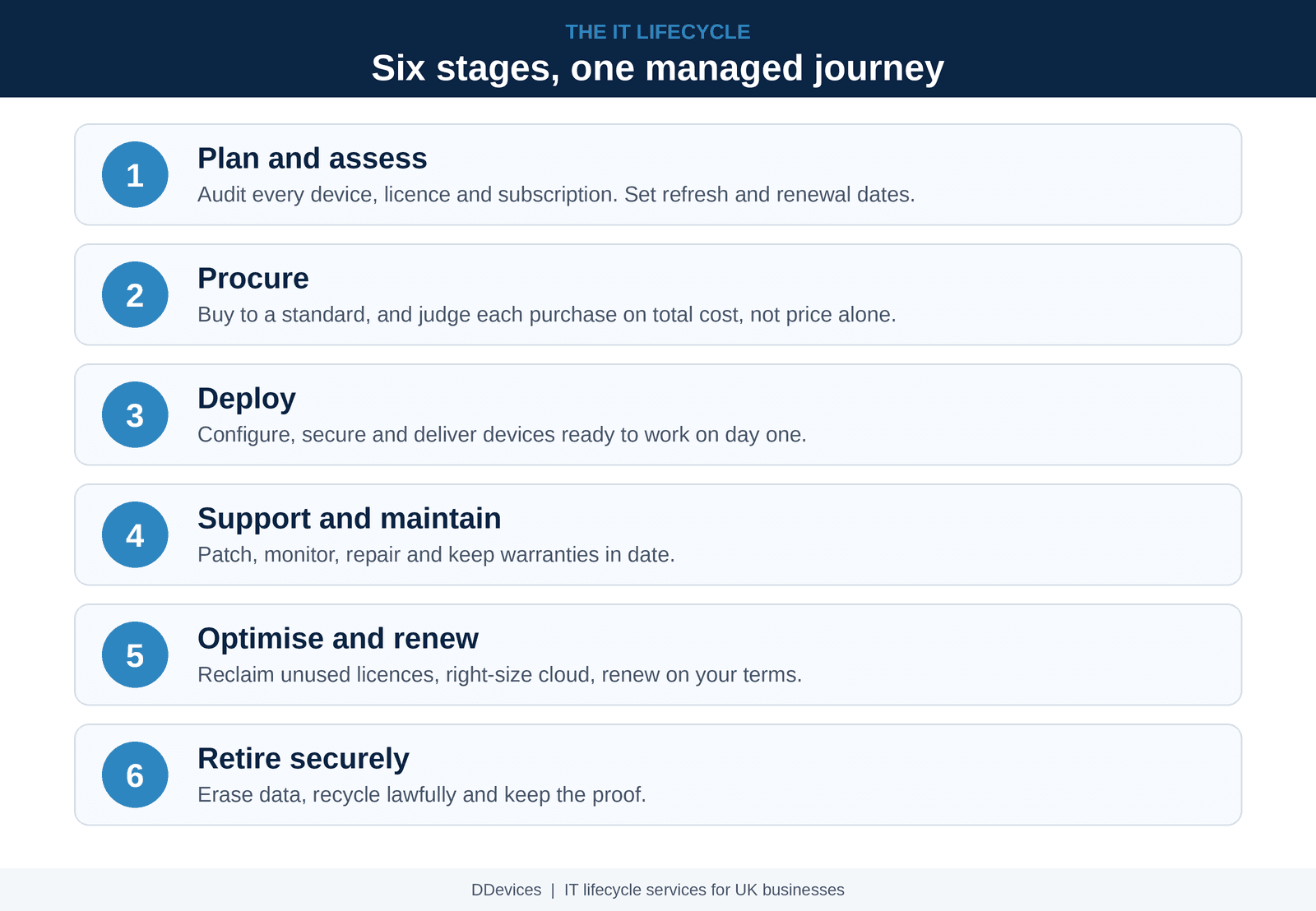
Six: plan and assess, procure, deploy, support and maintain, optimise and renew, and retire securely.
Poor visibility, shadow IT and AI sprawl, patching and end-of-support gaps, licence waste and audit risk, insecure retirement, and siloed ownership.
Run discovery continuously, reconcile against purchase and finance data every quarter, check a sample against the physical estate at least yearly, and review licence usage quarterly.
No. Smaller teams often feel these challenges more because there is rarely a dedicated IT role to catch a missed renewal or an unwiped laptop. In the government's survey, just 3% of micro businesses had someone in an IT role looking after cyber security.