
Procurement has evolved far beyond purchasing goods and services at the lowest possible price. In today's digital economy, every procurement decision has the potential to influence operational performance, cybersecurity, supplier resilience, regulatory compliance, and long-term business growth.
For CIOs, CTOs, Procurement Directors, and Finance leaders, procurement is no longer simply a purchasing function, it has become a strategic business capability that directly supports organisational objectives.
However, many organisations continue to rely on fragmented procurement processes. Different departments purchase technology independently, supplier information is scattered across multiple systems, contract renewals are missed, and purchasing decisions are often made without complete visibility of cost, risk, or long-term value.
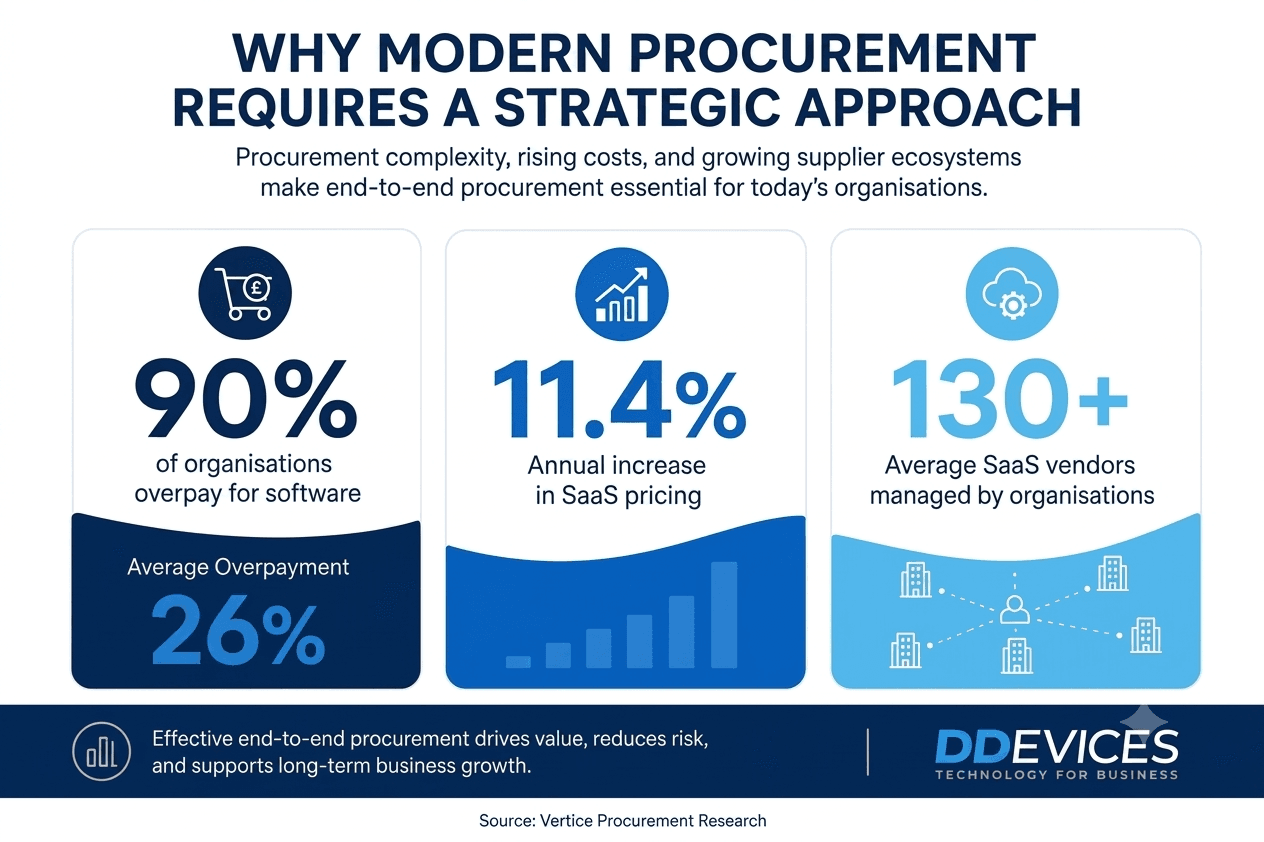
Research from Vertice highlights the scale of this challenge:
- 90% of organisations overpay for software by an average of 26%.
- Software prices continue to increase by approximately 11.4% every year.
- The average organisation now manages around 130 SaaS vendors.
These figures illustrate why traditional purchasing processes are no longer sufficient. Without structured governance across the entire procurement lifecycle, organisations risk higher operating costs, supplier inefficiencies, contract management challenges, and missed commercial opportunities.
This is why leading organisations are adopting end-to-end procurement.
In this guide, we'll explore how end-to-end procurement works, why it matters for modern organisations, and how procurement leaders can build a procurement strategy that supports sustainable business growth.
What Is End-to-End Procurement?
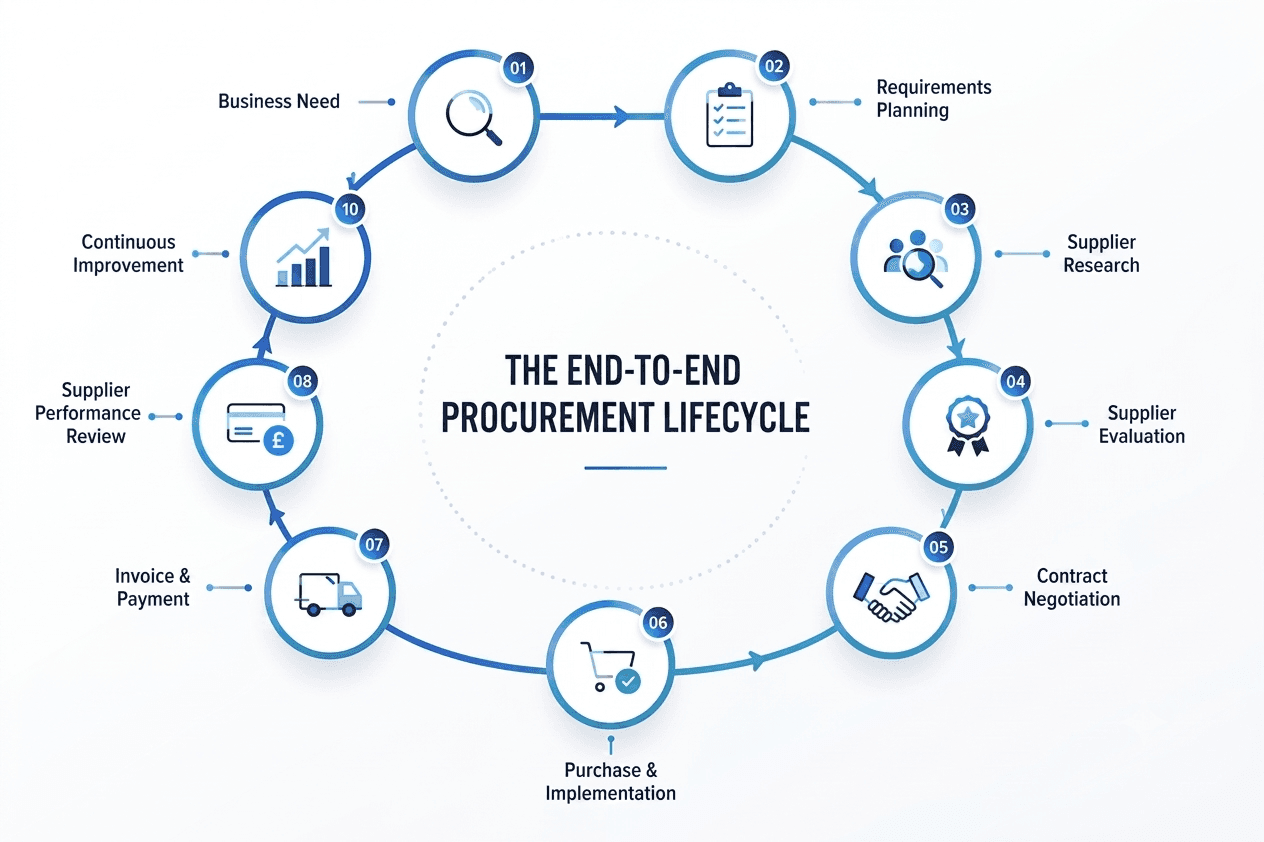
End-to-end procurement is the structured management of the entire procurement lifecycle, from identifying a business requirement through supplier sourcing, evaluation, contracting, purchasing, payment, supplier performance management, and continuous improvement.
While traditional procurement often focuses on placing purchase orders and controlling immediate costs, end-to-end procurement takes a broader strategic view. It ensures that every procurement decision aligns with wider business objectives, supports regulatory compliance, reduces supplier risk, and maximises long-term value.
For organisations investing in IT infrastructure, cloud services, cybersecurity, enterprise software, or managed services, this approach provides significantly greater control over procurement activities while helping reduce unnecessary expenditure and operational inefficiencies.
An effective end-to-end procurement strategy enables organisations to:
- Improve visibility across the entire procurement lifecycle.
- Standardise procurement policies and approval workflows.
- Strengthen supplier evaluation and contract management.
- Reduce procurement cycle times.
- Improve financial forecasting and budget control.
- Minimise supplier and compliance risks.
- Support better commercial negotiations.
- Maximise Total Cost of Ownership (TCO) rather than focusing solely on purchase price.
Why End-to-End Procurement Matters More Than Ever
The procurement landscape has changed dramatically over the last decade.
Organisations are no longer purchasing a handful of IT products from a limited number of suppliers. Today's procurement teams are responsible for managing increasingly complex technology ecosystems that include cloud platforms, enterprise software, cybersecurity solutions, managed services, hybrid infrastructure, and global supplier networks.
This increased complexity has transformed procurement into a strategic business function.
Every purchasing decision now influences operational resilience, cybersecurity, regulatory compliance, supplier performance, and long-term financial planning. As a result, organisations that continue to rely on disconnected procurement processes often experience:
- Limited visibility into organisational spending.
- Duplicate software licences and technology purchases.
- Inefficient supplier management.
- Delayed procurement approvals.
- Contract renewal risks.
- Poor commercial negotiations.
- Increased compliance exposure.
- Higher Total Cost of Ownership (TCO).
Industry Insight:
"According to Vertice, the average organisation now manages approximately 130 SaaS vendors, making supplier governance increasingly difficult without a structured procurement strategy. The same research also found that software costs continue to rise by 11.4% annually, placing additional pressure on procurement teams to optimise commercial agreements and control technology expenditure."
The 7 Stages of the End-to-End Procurement Process
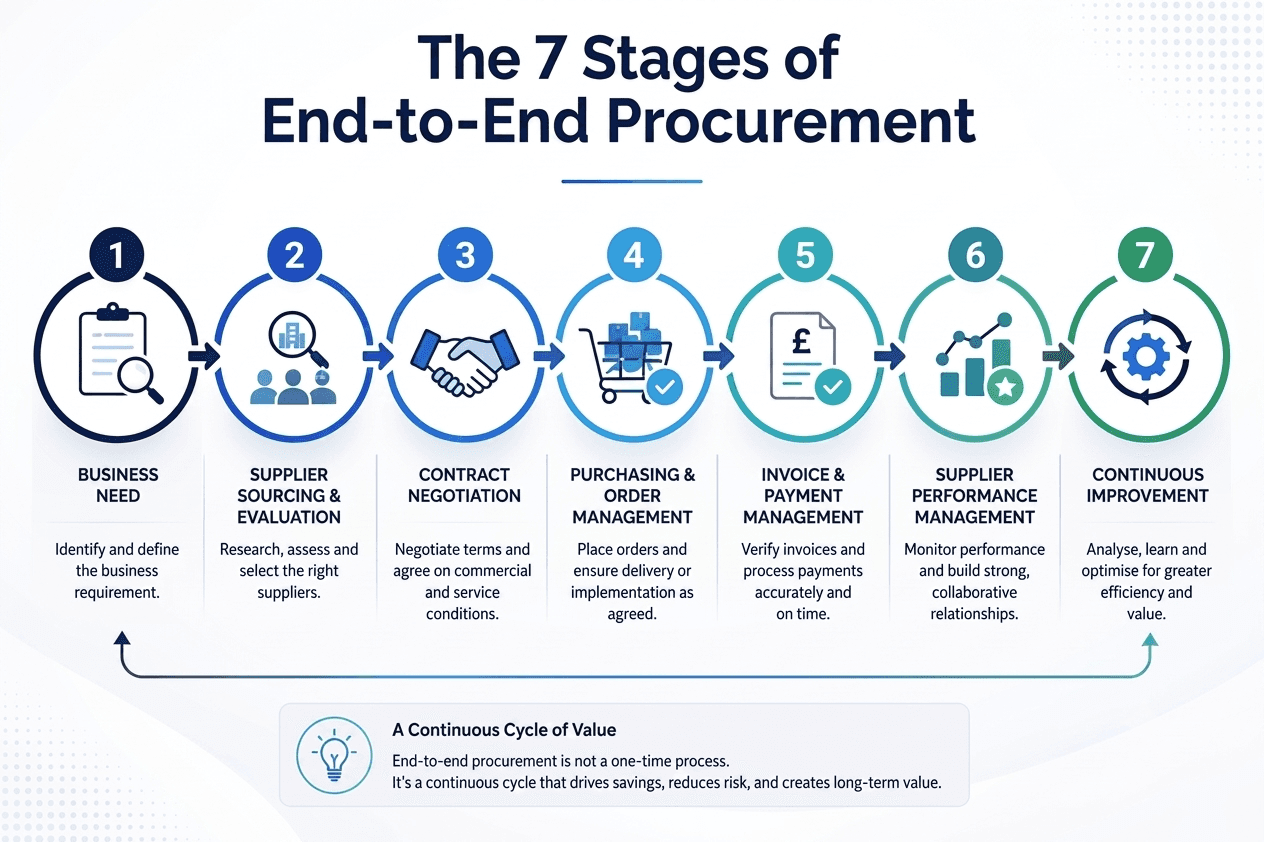
Successful procurement is built on a structured process rather than individual purchasing decisions. While every organisation has its own policies and approval workflows, most procurement programmes follow the same seven core stages.
Each stage contributes to better supplier management, stronger commercial control, and greater long-term value.
1. Business Requirements
Every procurement project begins by identifying a genuine business need. This includes defining technical, operational, financial, and compliance requirements before engaging suppliers.
A clear understanding of business objectives helps ensure procurement decisions align with wider organisational goals rather than immediate purchasing needs.
2. Supplier Sourcing and Evaluation
Once requirements are established, procurement teams identify potential suppliers and evaluate them based on experience, financial stability, technical capability, pricing, cybersecurity standards, service quality, and long-term support.
Selecting the right supplier is often more valuable than simply accepting the lowest quotation.
3. Contract Negotiation
Commercial terms, service level agreements (SLAs), warranties, pricing structures, licensing, and contract conditions are negotiated to minimise risk and maximise long-term value.
Effective contract management helps organisations avoid unexpected costs while strengthening supplier relationships.
4. Purchasing and Order Management
Following approval, purchase orders are issued, deliveries are coordinated, and procurement teams monitor implementation to ensure products or services are delivered according to agreed specifications and timelines.
5. Invoice and Payment Management
Invoices are verified against purchase orders and delivery records before payment is authorised. This stage improves financial accuracy, strengthens cash flow management, and reduces billing errors.
6. Supplier Performance Management
Procurement doesn't end once a purchase is complete. Organisations should continuously evaluate supplier performance against agreed KPIs such as delivery reliability, product quality, responsiveness, and ongoing support.
Regular performance reviews help build stronger, long-term supplier partnerships.
7. Continuous Improvement
Leading organisations regularly review procurement data, supplier performance, contracts, and purchasing processes to identify opportunities for greater efficiency, cost optimisation, and risk reduction.
Continuous improvement ensures procurement evolves alongside changing business priorities and market conditions.
Why Businesses Choose DDevices for End-to-End Procurement
At DDevices, we help organisations across the UK simplify and optimise the entire procurement lifecycle. From identifying business requirements and evaluating suppliers to contract management, technology sourcing, deployment, and lifecycle optimisation, our procurement specialists work closely with clients to ensure every technology investment supports long-term business objectives.
Our end-to-end procurement approach enables organisations to:
- Source enterprise IT hardware, software, cloud, and cybersecurity solutions from leading global vendors.
- Improve commercial outcomes through strategic supplier selection and competitive pricing.
- Reduce procurement complexity with a single trusted technology partner.
- Strengthen supplier governance, contract management, and procurement visibility.
- Lower Total Cost of Ownership (TCO) through lifecycle-focused procurement strategies.
- Mitigate commercial, operational, and supplier risks.
- Support digital transformation initiatives with scalable technology procurement.
Whether your organisation is refreshing its IT infrastructure, expanding cloud capabilities, implementing cybersecurity solutions, or modernising workplace technology, DDevices provides the procurement expertise needed to deliver smarter purchasing decisions and measurable long-term value.
💡 DDevices Procurement Expert Insight
The most successful organisations don't measure procurement by the number of purchase orders processed, they measure it by the business value created. Strategic procurement reduces risk, strengthens supplier partnerships, improves financial control, and ensures every technology investment contributes to long-term organisational success.
Conclusion
Procurement is no longer simply about purchasing products at the lowest possible cost. As organisations continue to invest in cloud technologies, enterprise software, cybersecurity, and modern IT infrastructure, procurement has become a strategic function that directly influences operational resilience, financial performance, and long-term business growth.
By adopting an end-to-end procurement approach, organisations gain complete visibility across the procurement lifecycle, strengthen supplier relationships, improve governance, reduce commercial risk, and make more informed purchasing decisions. Rather than viewing procurement as a transactional process, leading organisations recognise it as a continuous strategy for delivering measurable business value.
Frequently Asked Questions
End-to-end procurement is the complete management of the procurement lifecycle, from identifying a business requirement and selecting suppliers through to purchasing, contract management, payment, supplier performance monitoring, and continuous improvement.
Traditional procurement typically focuses on purchasing goods or services. End-to-end procurement manages the entire procurement process, improving visibility, supplier governance, commercial control, and long-term business value.
Most organisations follow seven key stages:
1. Business requirements
2. Supplier sourcing and evaluation
3. Contract negotiation
4. Purchasing and order management
5. Invoice and payment management
6. Supplier performance management
7. Continuous improvement
A structured procurement process helps organisations reduce costs, improve supplier relationships, strengthen compliance, minimise risk, increase procurement efficiency, and maximise the return on technology investments.
Key benefits include:
- Improved spend visibility
- Better supplier management
- Reduced procurement risk
- Faster procurement cycles
- Stronger contract governance
- Lower Total Cost of Ownership (TCO)
- Greater operational efficiency
- Better alignment between procurement and business strategy
DDevices provides strategic IT procurement services that support organisations throughout the entire procurement lifecycle. Our team helps businesses source enterprise technology, evaluate suppliers, negotiate commercial agreements, manage procurement risk, and optimise technology investments to deliver long-term business value.