Cyber Security Challenges Facing UK Businesses in 2026
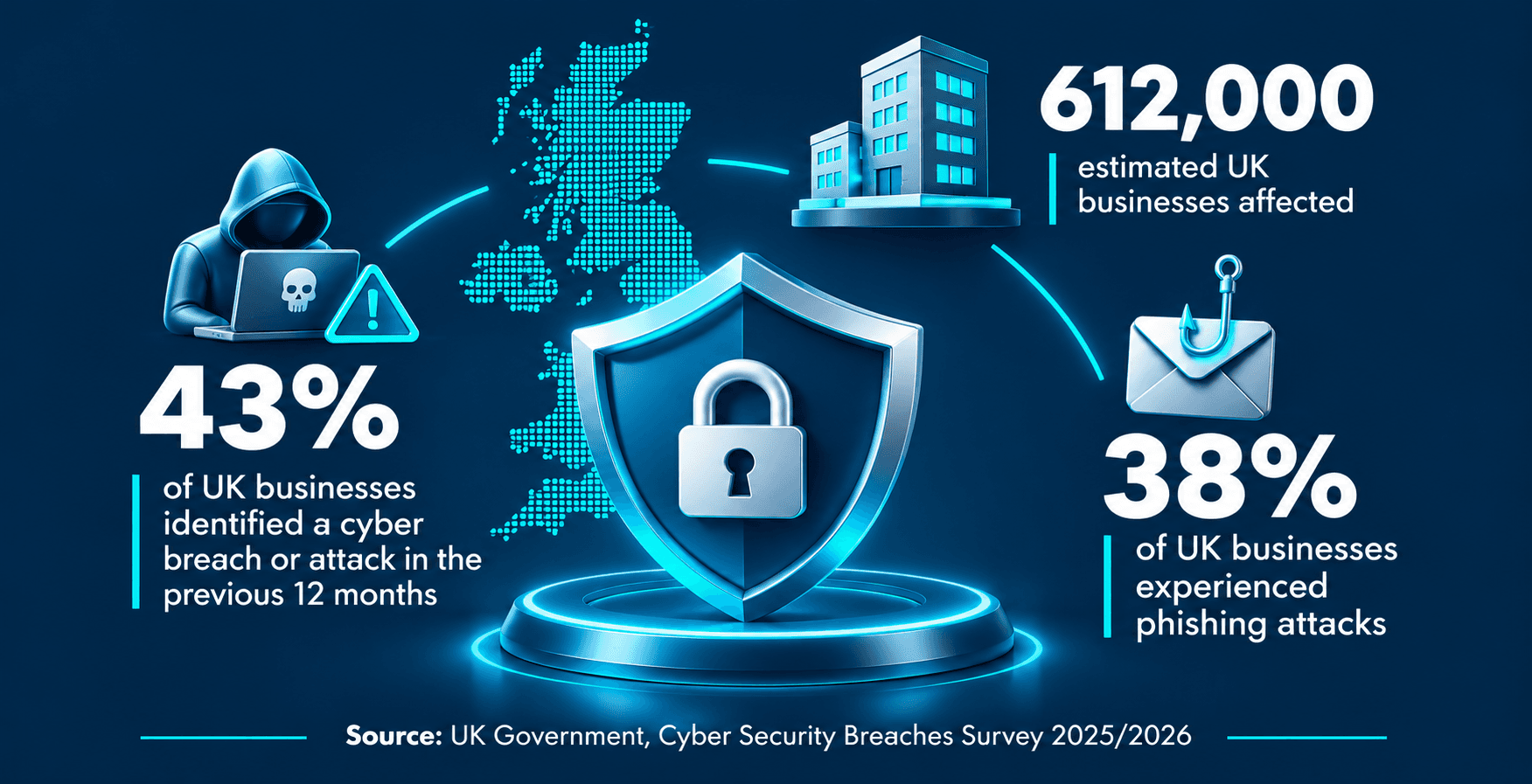
Cyber security is becoming increasingly complex as businesses adopt cloud platforms, AI tools, connected devices and hybrid working environments. At the same time, cybercriminals are using more sophisticated techniques to exploit vulnerabilities, compromise sensitive information and disrupt business operations. According to the UK Government's Cyber Security Breaches Survey 2025/2026, 43% of UK businesses identified a cyber breach or attack in the previous 12 months. Understanding these challenges is essential for organisations looking to protect their systems, maintain customer trust and strengthen operational resilience.
Why Cyber Security Is Becoming More Challenging for Businesses
Businesses face a broader attack surface as their technology environments become more interconnected. Cloud applications, remote access, third-party suppliers and digital business processes create additional points that organisations must secure. Managing these risks requires more than traditional antivirus software or firewalls.
Increasingly Sophisticated Cyber Threats
Cybercriminals are continually adapting their methods, using techniques such as AI-assisted phishing, credential theft, ransomware and social engineering to target organisations. These attacks can bypass basic security measures, compromise employee accounts and expose sensitive business information. The National Cyber Security Centre (NCSC) highlights several evolving security challenges that organisations must consider when protecting their digital environments.
Growing Business Dependence on Digital Infrastructure
Organisations increasingly depend on cloud services, connected devices, business applications and external technology providers to operate. A vulnerability in one system or supplier can affect other connected services, potentially causing data exposure or operational disruption. Businesses therefore need to understand how their infrastructure, access permissions and third-party relationships contribute to their overall security exposure. A clear cyber security strategy can help establish priorities for managing these interconnected risks.
7 Major Cyber Security Challenges Facing Businesses
Every organisation has its own security priorities, budgets and operational requirements. However, despite these differences, many businesses encounter the same cyber security challenges when protecting their systems and data. Left unresolved, these issues can expose sensitive information, disrupt operations and increase recovery costs. Below are some of the most common cyber security challenges organisations face today and the practical approaches used to address them.
1. AI-Powered Attacks and Sophisticated Phishing
Artificial intelligence is making cyber attacks more convincing and difficult to identify. Cybercriminals can use AI tools to create realistic phishing emails, impersonate employees or executives, generate fraudulent messages and automate social engineering attempts. These techniques increase the risk of employees disclosing login credentials or approving unauthorized transactions.
For businesses, the challenge is distinguishing legitimate communications from increasingly sophisticated impersonation attempts. Organisations should strengthen email security, enforce multi-factor authentication (MFA), introduce employee awareness training and establish verification procedures for sensitive requests. The NCSC's guidance on current cyber security challenges provides further context on evolving threats.
2. Ransomware and Data Extortion
Ransomware remains a significant business security challenge because it can prevent access to critical systems, encrypt business data and disrupt essential operations. Modern attackers may also steal sensitive information before demanding payment, creating additional risks involving data exposure, regulatory obligations and reputational damage.
Businesses without reliable backups and tested recovery procedures may face prolonged disruption following an attack. Organisations should maintain secure, regularly tested backups, apply security updates, restrict privileged access and prepare an incident response plan. The NCSC's incident management guidance explains how organisations can prepare for and manage cyber security incidents.
3. Cloud Security and Hybrid Working Risks
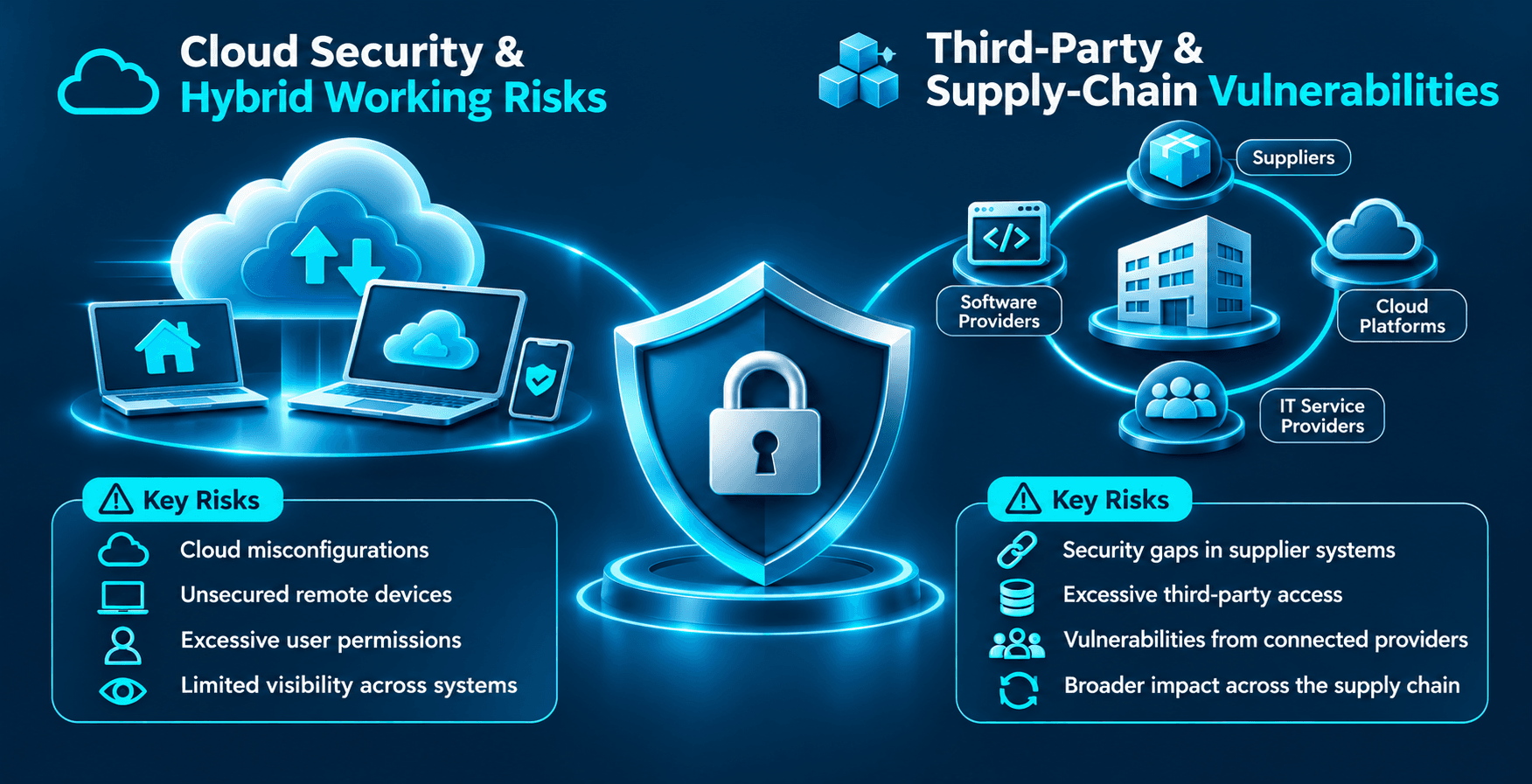
Cloud platforms and remote working have made business operations more flexible, but they also introduce security challenges. Misconfigured cloud services, weak access controls, unsecured employee devices and excessive user permissions can expose sensitive business information. Organisations may also struggle to maintain visibility across multiple cloud applications and remote endpoints.
Businesses should review cloud configurations, enforce multi-factor authentication, apply role-based access controls and monitor activity across connected systems. The NCSC's cloud security guidance provides principles for choosing, configuring and using cloud services securely. Organisations can also explore DDevices Cyber Security Solutions when reviewing their cloud and infrastructure security requirements.
4. Third-Party and Supply-Chain Vulnerabilities
Businesses often rely on external software providers, cloud platforms, IT service providers and other suppliers to support daily operations. However, a supplier with weak security controls or excessive access to business systems can introduce vulnerabilities into the wider organisation. A compromise involving one provider may also affect multiple connected customers.
The challenge is maintaining visibility of supplier security practices, subcontractors, data access and privileged permissions. Businesses should assess suppliers before entering agreements, define security requirements in contracts, restrict third-party access and review supplier risks regularly. The NCSC's supply-chain security guidance explains how organisations can identify and manage these dependencies.
5. Legacy Systems and Unpatched Vulnerabilities
Many organisations continue to rely on older software, unsupported operating systems and outdated IT infrastructure. These systems can be difficult to maintain, integrate with modern technologies or update without disrupting business operations. As a result, known security vulnerabilities may remain unresolved, creating opportunities for attackers to gain unauthorised access or compromise connected systems.
Businesses should prioritise the following actions:
- Identify outdated assets: Maintain an inventory of software, operating systems and hardware.
- Prioritise security updates: Address critical vulnerabilities and unsupported software first.
- Restrict system access: Limit connections to legacy infrastructure and isolate vulnerable components where possible.
- Monitor exposed systems: Review logs and security alerts for suspicious activity.
The NCSC's vulnerability management guidance explains how organisations can identify, assess and prioritise security weaknesses.
6. Identity, Access Management and Insider Threats
Managing who can access business systems and sensitive information is another major cyber security challenge. Weak authentication, excessive user permissions, shared accounts and inactive employee accounts can create opportunities for unauthorised access. Risks may also arise from employees or contractors who accidentally expose information, misuse their access or deliberately compromise business systems.
Businesses should understand common access-related risks and the controls needed to address them.
7. Skills Shortages and Limited Security Resources
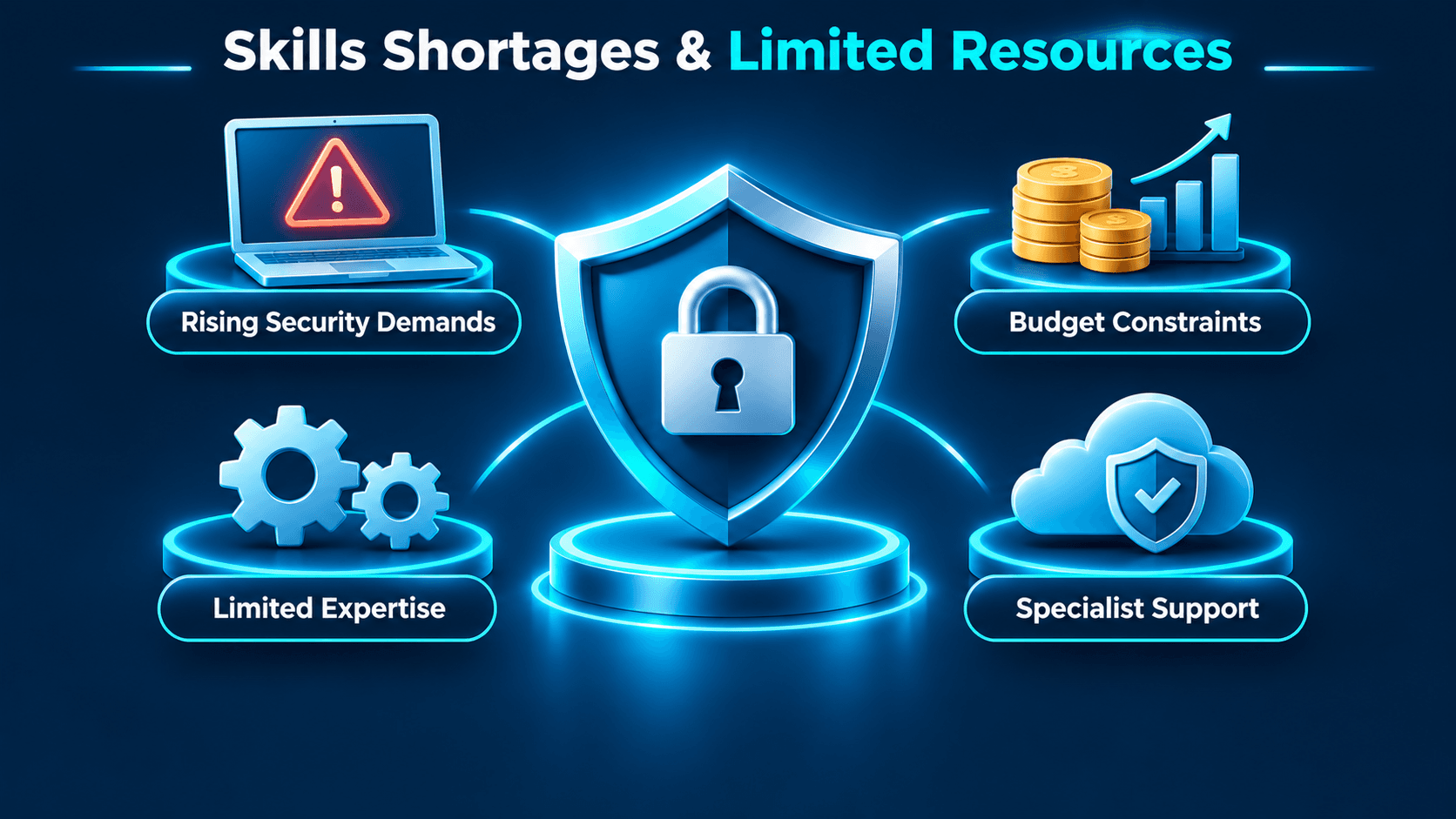
Many businesses struggle to maintain effective cyber security because they lack specialist skills, dedicated security teams or sufficient resources. Smaller organisations may depend on general IT staff to manage security alongside their other responsibilities, making it difficult to monitor threats, investigate alerts and respond to incidents promptly.
Limited budgets can also delay security upgrades, employee training and infrastructure improvements. To address these challenges, businesses should:
- Prioritise critical risks: Direct available resources towards systems and vulnerabilities with the greatest business impact.
- Develop employee awareness: Train staff to recognise phishing, suspicious activity and unsafe digital practices.
- Consider specialist support: Access external expertise where internal security capabilities are limited.
- Improve security monitoring: Establish processes for identifying, escalating and investigating suspicious activity.
The NCSC guidance for small and medium-sized organisations provides practical advice for businesses looking to strengthen security with available resources.
How Can Businesses Overcome Cyber Security Challenges?
Addressing cyber security challenges requires a combination of effective security controls, employee awareness and ongoing risk management. Businesses should adopt a proactive approach that protects critical systems, reduces vulnerabilities and prepares teams to respond to security incidents.
Strengthen Security Controls and Monitoring
Organisations should implement multi-factor authentication (MFA), endpoint protection, firewalls, regular security updates and secure data backups. Continuous monitoring can help identify suspicious activity, while regular vulnerability assessments help businesses detect weaknesses before they are exploited.
The NCSC's 10 Steps to Cyber Security provides practical guidance for improving organisational security. Businesses should also review their cyber security strategy to ensure security controls align with their operational requirements.
Improve Employee Awareness and Incident Readiness
Employees play an important role in preventing cyber incidents. Regular security awareness training helps staff recognise phishing attempts, suspicious links and social engineering tactics. Businesses should also establish clear incident reporting procedures, assign response responsibilities and test backup recovery processes.
Following the NCSC's incident management guidance can help organisations prepare for, respond to and recover from cyber security incidents.
How DDevices Helps Businesses Address Cyber Security Challenges
Managing modern cyber security challenges requires an approach that considers infrastructure, cloud environments, access controls and ongoing security requirements. DDevices provides technology and cyber security solutions to help UK organisations address their IT security needs.
Cyber Security Solutions for Modern IT Environments
Businesses can explore DDevices Cyber Security Solutions to understand how its services align with requirements around infrastructure protection, cloud security, identity management and cyber risk management.
Ongoing IT Management and Security Support
Maintaining secure IT environments requires regular attention to vulnerabilities, system performance and changing business requirements. Organisations can also explore DDevices Managed Services for ongoing IT management support.
By aligning technology solutions with business requirements, organisations can work towards a more secure and resilient IT environment.
Frequently Asked Questions
The major challenges include AI-powered attacks, phishing, ransomware, cloud security weaknesses, supply-chain vulnerabilities, outdated systems, insider threats and shortages of cyber security skills. These risks can expose sensitive information, disrupt operations and increase recovery costs.
Cyber security is becoming more complex because businesses increasingly depend on cloud platforms, connected devices, remote access and third-party providers. At the same time, attackers are adopting more sophisticated techniques, making it harder for organisations to identify and manage vulnerabilities.
Small businesses often face limited security budgets, a lack of specialist expertise, outdated technology and insufficient monitoring capabilities. They may also struggle to implement employee training, maintain secure backups and respond effectively to incidents.
AI can help attackers produce convincing phishing messages, impersonate trusted individuals, automate social engineering and accelerate certain stages of cyber attacks. Businesses need stronger identity verification, employee awareness and security monitoring to address these risks.
Businesses can reduce risks by implementing multi-factor authentication, maintaining updated systems, securing cloud environments, training employees, restricting access permissions and testing backups. Regular vulnerability assessments and incident response planning also help strengthen cyber resilience.