How to Build a Cyber Security Strategy for Your Business
Building a cyber security strategy requires more than investing in security software or responding to threats as they emerge. Businesses need a structured approach that aligns security priorities with operational goals, identifies critical risks and establishes clear responsibilities. A well-defined cyber security strategy helps organisations protect sensitive data, strengthen infrastructure, manage vulnerabilities and maintain business continuity. This guide explains how to develop and implement a practical strategy for your business.
For more business technology guidance, explore the DDevices research hub.
Why Your Business Needs a Cyber Security Strategy
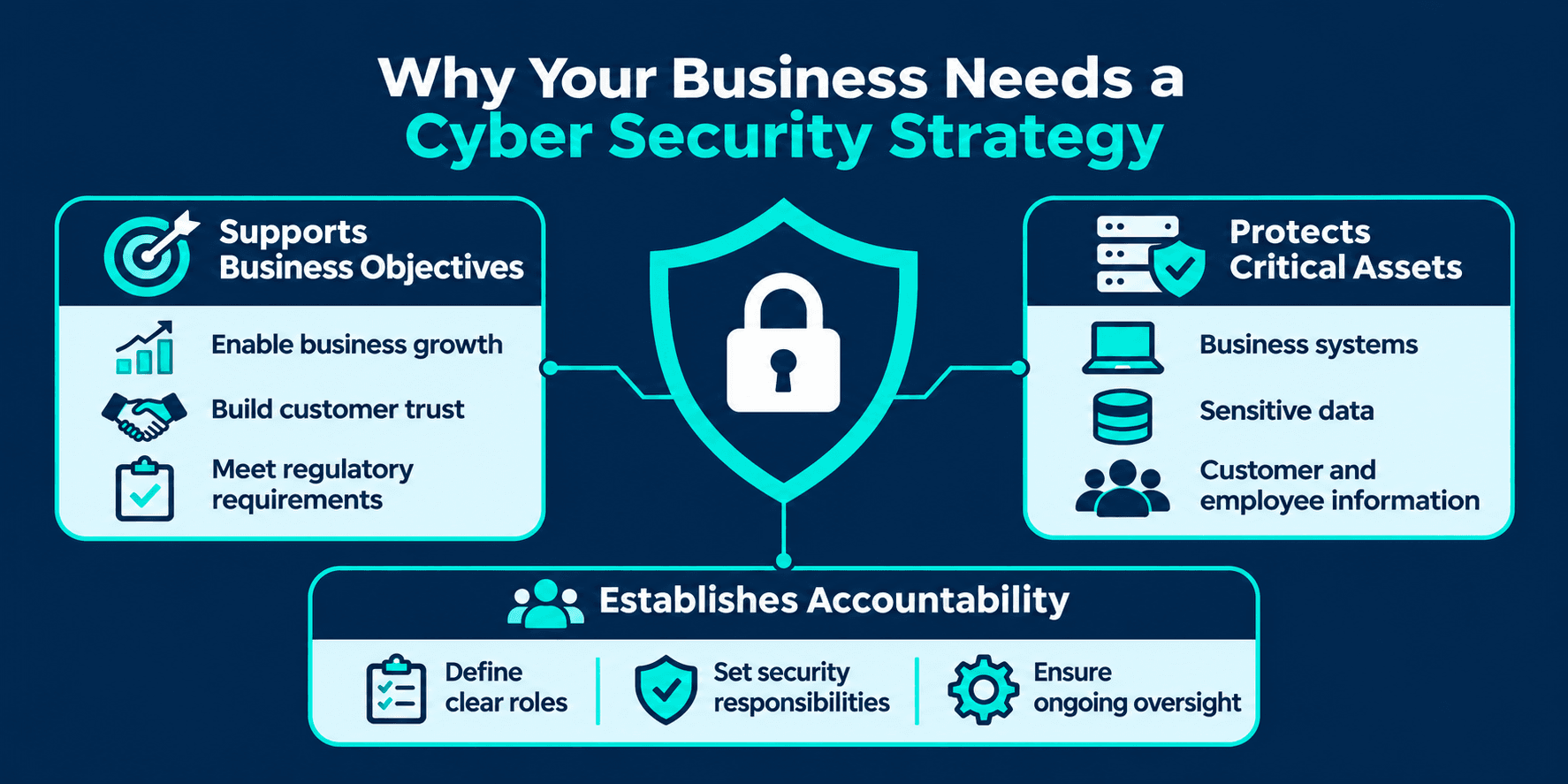
A cyber security strategy gives businesses a structured way to protect their digital assets, manage security risks and support operational continuity. Without clear priorities and responsibilities, organisations may invest in disconnected security tools while leaving critical vulnerabilities unaddressed.
Aligning Security with Business Objectives
Cybersecurity should support business goals such as protecting customer information, maintaining service availability and meeting regulatory obligations. A clear strategy helps decision-makers align security investment with business requirements. DDevices Consulting Services can provide relevant strategic IT consulting support.
Understanding Business Risks and Responsibilities
Businesses need to understand which systems, data and services are most critical, who is responsible for protecting them and what could happen if they are compromised. The NCSC's risk management guidance provides a structured approach to identifying and managing these risks.
A documented strategy turns these responsibilities into clear security priorities, helping organisations make informed decisions and improve their cyber resilience.
Step 1: Assess Your Current Cyber Security Position
Before developing a security roadmap, businesses need to understand their existing IT environment, security controls and potential weaknesses. A baseline assessment helps identify gaps and establish which areas require immediate attention.
Identify Critical Assets, Systems and Data
Create an inventory of business-critical assets, including servers, employee devices, cloud applications, customer databases and network infrastructure. Identify where sensitive information is stored, who can access it and which services are essential for daily operations.
Review Existing Security Controls and Vulnerabilities
Evaluate existing protections, including multi-factor authentication (MFA), endpoint security, firewalls, access permissions, backup systems and software updates. Review previous incidents, unresolved vulnerabilities and third-party access to identify potential weaknesses.
The NCSC's risk management guidance provides a useful foundation for assessing organisational risks. Businesses can also review their existing protections against the services offered through DDevices Cyber Security Solutions.
Step 2: Identify and Prioritise Cyber Security Risks
Not every security risk presents the same level of danger. Businesses should evaluate potential threats according to their likelihood and the impact they could have on operations, finances and sensitive information.
Evaluate Risk Likelihood and Business Impact
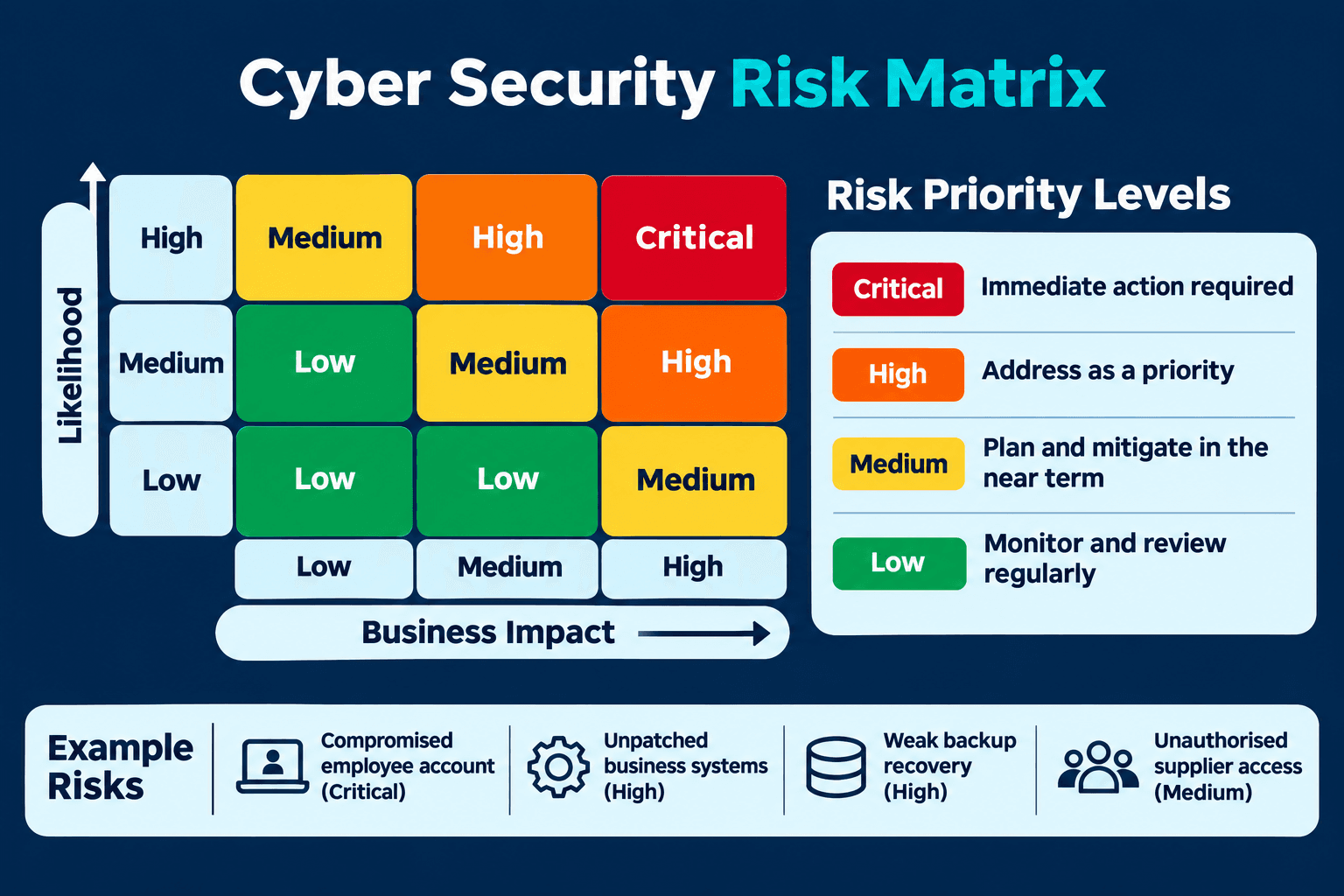
Assess each identified risk by considering how easily it could occur and the consequences if it materialises. For example, compromised employee accounts, unpatched systems and insecure supplier access may expose critical business resources. Consider financial losses, operational disruption, data exposure and regulatory implications when evaluating impact.
Prioritise Risks Using a Risk Matrix
Use a risk matrix to classify issues as critical, high, medium or low priority. Address risks with high likelihood and severe business impact first, while assigning owners and target completion dates to corrective actions.
| Example risk | Likelihood | Impact | Priority |
|---|---|---|---|
| Compromised employee account | High | High | Critical |
| Unpatched business systems | Medium | High | High |
| Weak backup recovery | Medium | High | High |
| Unauthorised supplier access | Medium | Medium | Medium |
This approach helps organisations direct security resources towards the weaknesses that pose the greatest business risk.
Step 3: Define Security Objectives and Responsibilities
Once business risks have been prioritised, organisations should establish clear security objectives and assign responsibility for achieving them. This ensures cybersecurity activities support business requirements rather than operating as disconnected IT tasks.
Establish Governance and Ownership
Define who is responsible for security decisions, risk management, access approvals and incident escalation. Senior management should oversee security priorities, while IT and security teams manage technical controls and employees follow established policies. Clear ownership helps prevent gaps in accountability.
Align Security Priorities with Business Requirements
Set measurable objectives based on organisational needs, such as protecting customer data, maintaining service availability, reducing unauthorised access and meeting applicable compliance obligations. These priorities should also reflect business growth, technology changes and operational requirements.
DDevices Consulting Services can be relevant when organisations need to align technology planning with wider business objectives.
Step 4: Select the Right Cyber Security Controls and Frameworks
After identifying risks and defining security objectives, businesses need to select appropriate security controls and frameworks. The right combination should address organisational risks, protect critical systems and support applicable compliance requirements.
Choose Technical and Operational Security Controls
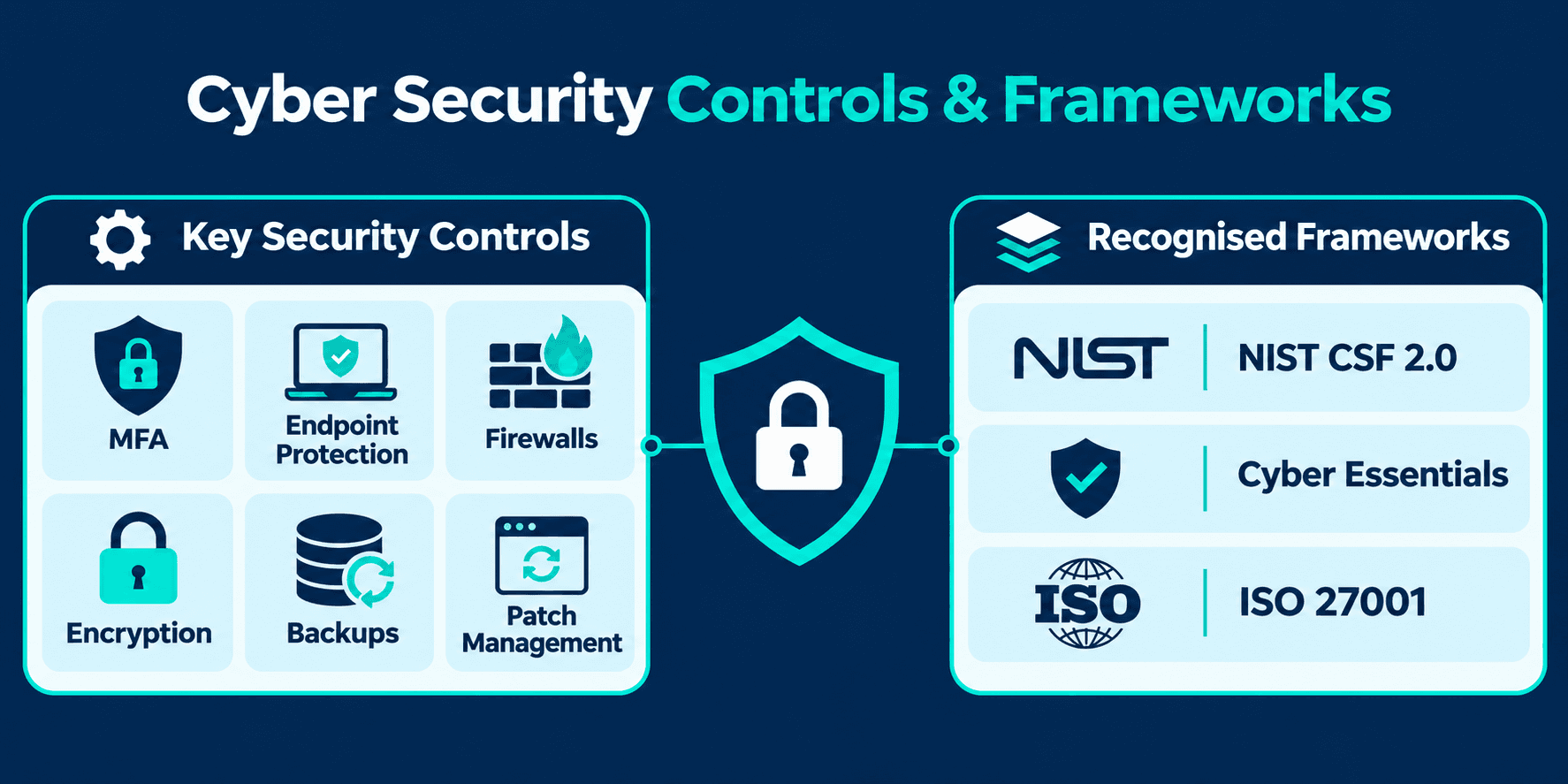
Implement security measures based on the risks identified during the assessment. Key controls include multi-factor authentication (MFA), endpoint protection, firewalls, encryption, regular software patching, secure backups and restricted user permissions.
Businesses should also consider cloud security, network protection and employee awareness training. DDevices Cyber Security Solutions and Modern Infrastructure Solutions are relevant to organisations reviewing their security and infrastructure requirements.
Use Relevant Frameworks and UK Security Guidance
Frameworks provide a structured approach to managing cybersecurity. The NIST Cybersecurity Framework 2.0 organises security activities around six functions: Govern, Identify, Protect, Detect, Respond and Recover.
UK businesses can also consider Cyber Essentials as a baseline security scheme, while ISO/IEC 27001 provides requirements for establishing and continually improving an information security management system.
Choose frameworks according to business size, risk exposure, customer expectations and regulatory obligations rather than adopting standards without a clear purpose.
Step 5: Create and Monitor Your Cyber Security Implementation Roadmap
A cybersecurity strategy needs a realistic implementation plan to turn security objectives into measurable actions. Businesses should organise improvements according to risk priority, available resources, budget and operational requirements.
Allocate Budget, Resources and Responsibilities
Estimate the investment required for security tools, infrastructure improvements, employee training and specialist support. Assign an owner to each activity and establish realistic deadlines. DDevices Procurement Services can support relevant technology procurement requirements.
Implement Security Improvements in Phases
A 90-day roadmap provides a practical starting point:
| Timeline | Key activities |
|---|---|
| Days 1–30 | Review assets, access permissions and critical vulnerabilities |
| Days 31–60 | Strengthen MFA, endpoint protection and backup controls |
| Days 61–90 | Test recovery procedures, review monitoring and assess improvements |
Monitor, Test and Improve Security Performance
Establish ongoing monitoring, documented incident response procedures and regular backup recovery tests. Follow NCSC incident management guidance to help prepare for and manage security incidents.
Track measurable KPIs such as MFA coverage, patch compliance, backup recovery success and employee training completion. DDevices Managed Services can also be explored for ongoing IT management and security support.
Review the strategy regularly to ensure security controls remain effective as business requirements and cyber risks evolve. For a closer look at ongoing security support, read our guide to how managed IT security improves cyber security and compliance.
Why Choose DDevices?
Building an effective cyber security strategy requires the right combination of technology, expertise and ongoing support. DDevices helps UK organisations address their IT and security requirements through its range of technology and managed services.
Businesses can explore:
- Cyber Security Solutions: Support for strengthening business security and managing cyber risks.
- Managed Services: Ongoing IT management to support operational performance and infrastructure.
- Consulting Services: Strategic technology guidance aligned with business objectives.
- Cloud Solutions: Technology solutions to support cloud adoption and infrastructure requirements.
- Modern Infrastructure Solutions: Infrastructure services to support secure and reliable IT environments.
By bringing these capabilities together, DDevices can help organisations plan technology improvements and build a more resilient IT environment.
Looking to develop a stronger cyber security strategy? Explore DDevices Cyber Security Solutions to discuss your organisation's requirements.
Frequently Asked Questions
The 5 Cs of cybersecurity are commonly described as Change, Compliance, Cost, Continuity and Coverage. They provide a management perspective for considering how security decisions affect business operations, regulatory requirements, budgets and protection. This is a useful planning concept rather than a universally recognised cybersecurity standard.
The 80/20 rule applies the Pareto principle to cybersecurity risk management. It suggests that a relatively small number of vulnerabilities or security weaknesses may account for a disproportionate amount of business risk. Organisations can use this principle to prioritise critical vulnerabilities and high-impact security improvements rather than treating every issue equally.
Start by identifying critical business data, devices and applications. Implement multi-factor authentication, endpoint protection, firewalls, regular software updates and secure backups. Train employees to recognise phishing attacks, restrict access permissions and establish an incident response plan. The NCSC's guidance for small organisations provides a practical starting point.
L1, L2 and L3 commonly describe three levels of Security Operations Centre (SOC) support. L1 analysts monitor alerts and perform initial investigations. L2 analysts conduct deeper investigations and coordinate incident response. L3 specialists handle complex threats, advanced threat hunting and forensic analysis. Responsibilities vary between organisations.