The Biggest Cyber Security Threats Facing Businesses Today
Cyber security threats are becoming more complex as businesses rely on cloud platforms, digital systems, remote working and third-party services. From phishing and ransomware to AI-powered fraud and data breaches, cyber attacks can disrupt operations, expose sensitive information and cause significant financial losses. Understanding the biggest cyber security threats facing businesses is essential for UK organisations looking to protect their systems, employees and long-term business continuity.
Why Cyber Security Threats Are a Growing Business Concern
Cybercriminals use different techniques to gain access to business systems, steal sensitive information and disrupt operations. While some attacks exploit employees, others target software vulnerabilities, cloud environments and trusted suppliers. The following are among the most significant cyber security threats facing businesses today.
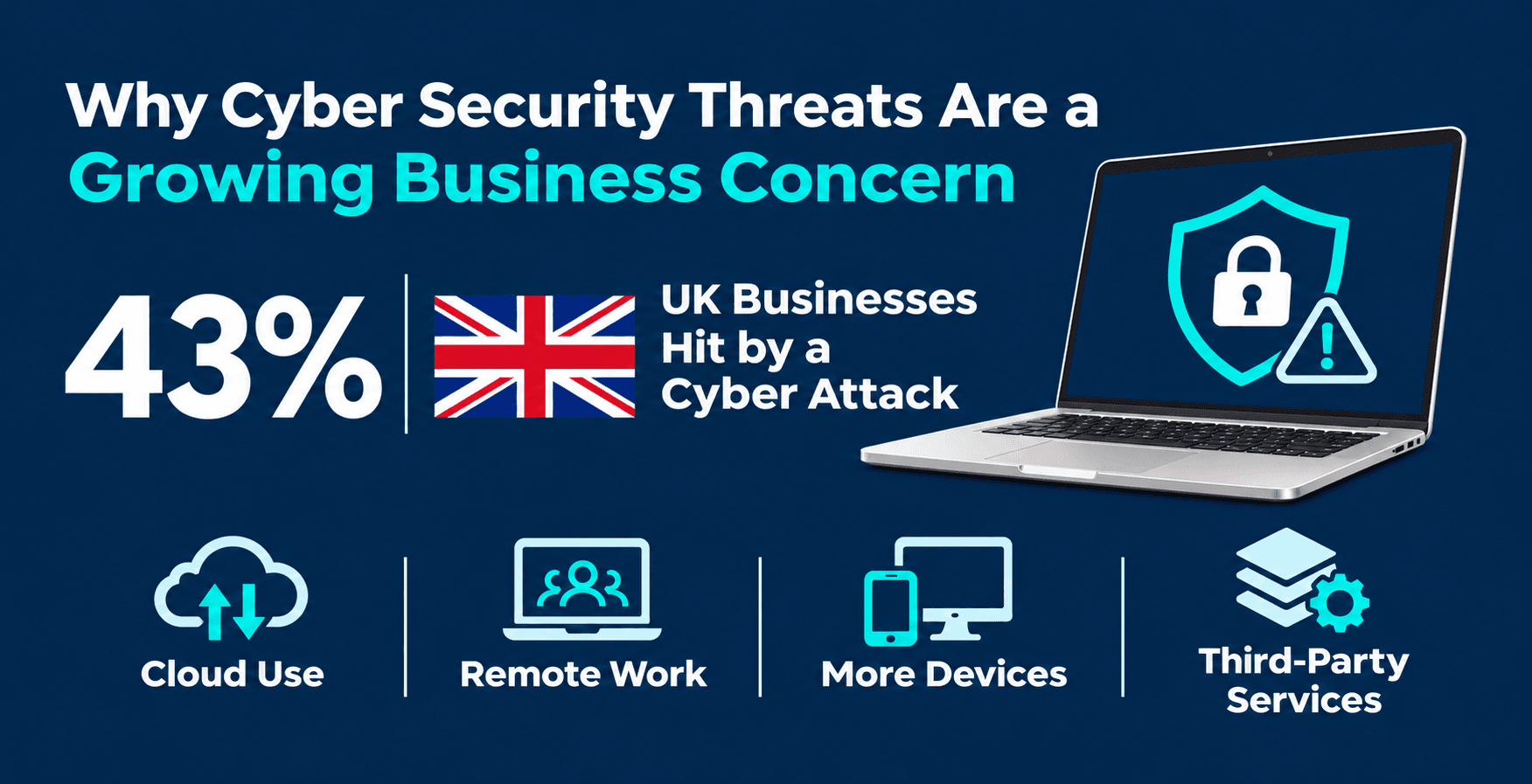
The UK Government's Cyber Security Breaches Survey 2025/2026 found that 43% of UK businesses experienced a cyber breach or attack during the previous 12 months. This demonstrates that cyber security is an operational concern for organisations of all sizes, not just large enterprises.
Expanding Digital Attack Surfaces
The adoption of cloud services, connected devices, remote working and business applications has expanded the number of systems that organisations need to protect. Every internet-facing application, employee account, endpoint and third-party connection can introduce potential security weaknesses if not properly managed.
Why Businesses of All Sizes Are Targets
Cybercriminals do not exclusively target large corporations. Small and medium-sized businesses can also be attractive targets because they may have limited security resources, outdated systems or insufficient access controls. Attackers may exploit these weaknesses to steal information, compromise business accounts, demand ransom payments or gain access to larger organisations through supplier relationships.
As a result, businesses need to understand the threats affecting their industry and assess how their technology, people and external dependencies could be exposed.
The Biggest Cyber Security Threats Facing Businesses
Cybercriminals use different techniques to gain access to business systems, steal sensitive information and disrupt operations. While some attacks exploit employees, others target software vulnerabilities, cloud environments and trusted suppliers. The following are among the most significant cyber security threats facing businesses today.
1. Phishing, Social Engineering and Business Email Compromise
Phishing attacks use fraudulent emails, messages or websites to trick employees into revealing login credentials, downloading malicious files or transferring money. Business Email Compromise (BEC) takes this further by impersonating executives, employees or suppliers to manipulate payment instructions and business transactions.
2. Ransomware and Malware Attacks
Ransomware is malicious software that encrypts business data or systems and demands payment for their release. Some attackers also steal confidential information and threaten to publish it. Other malware, including spyware and trojans, can monitor activity, steal information or provide unauthorised access to business networks.
3. AI-Powered Attacks and Deepfake Fraud
Cybercriminals increasingly exploit artificial intelligence to create convincing phishing messages, impersonate voices and produce realistic fake videos. Deepfake impersonation can make fraudulent payment requests or executive instructions appear legitimate, increasing the risk of financial fraud and unauthorised transactions.
4. Identity Theft and Credential-Based Attacks
Stolen usernames, passwords and authentication tokens can allow attackers to access corporate email, cloud applications and sensitive business systems. Credential stuffing, password spraying and session hijacking are techniques used to compromise accounts, particularly where authentication and access controls are weak.
5. Cloud Security and Supply Chain Vulnerabilities
Misconfigured cloud storage, excessive user permissions and insecure application interfaces can expose confidential business information. Supply-chain attacks create another route into organisations when attackers compromise a software provider, supplier or external service with access to business systems.
6. Insider Threats and Data Exfiltration
Insider threats can originate from employees, contractors or other individuals with legitimate access to business resources. Data may be exposed intentionally through theft or accidentally through unsafe sharing, misdirected emails and poor security practices. Unusual downloads and transfers of large volumes of information can indicate potential data exfiltration.
7. Unpatched Systems and Zero-Day Vulnerabilities
Outdated operating systems, applications and network devices may contain known security weaknesses that attackers can exploit. Zero-day vulnerabilities are flaws exploited before an effective security patch is available. Without timely updates and vulnerability management, business systems can remain exposed to attacks that compromise data and disrupt operations.
How Cyber Attacks Affect Business Operations
A cyber attack can affect more than an organisation's IT infrastructure. It can interrupt essential services, expose confidential information, increase operating costs and damage relationships with customers and business partners. The impact often extends beyond the initial security incident.
Financial Losses and Operational Disruption
Cyber attacks can result in direct financial losses through fraudulent payments, ransom demands, recovery expenses and business interruption. Ransomware or compromised systems may prevent employees from accessing essential applications, delaying projects, disrupting customer services and reducing productivity.
Organisations may also need to invest in forensic investigations, system restoration, external security support and additional protective measures. For small and medium-sized businesses, unexpected recovery costs can place considerable pressure on financial resources.
Data Exposure, Compliance and Reputational Damage
A data breach can expose customer details, employee records, financial information and intellectual property. Under the UK GDPR and Data Protection Act 2018, organisations handling personal data must meet applicable security and breach-reporting obligations.
Where a personal data breach is reportable, organisations generally need to notify the Information Commissioner's Office (ICO) within 72 hours of becoming aware of it, where feasible. Failure to meet applicable data protection requirements can lead to regulatory action and financial penalties.
Beyond regulatory consequences, customers may lose confidence in a business that fails to protect their information. Rebuilding trust, retaining customers and restoring supplier relationships can take considerably longer than recovering the affected IT systems.
Recent Cyber Attacks and Lessons for Businesses
Recent incidents show how cyber security weaknesses can affect organisations across different sectors.
Legal Aid Agency Cyber Attack
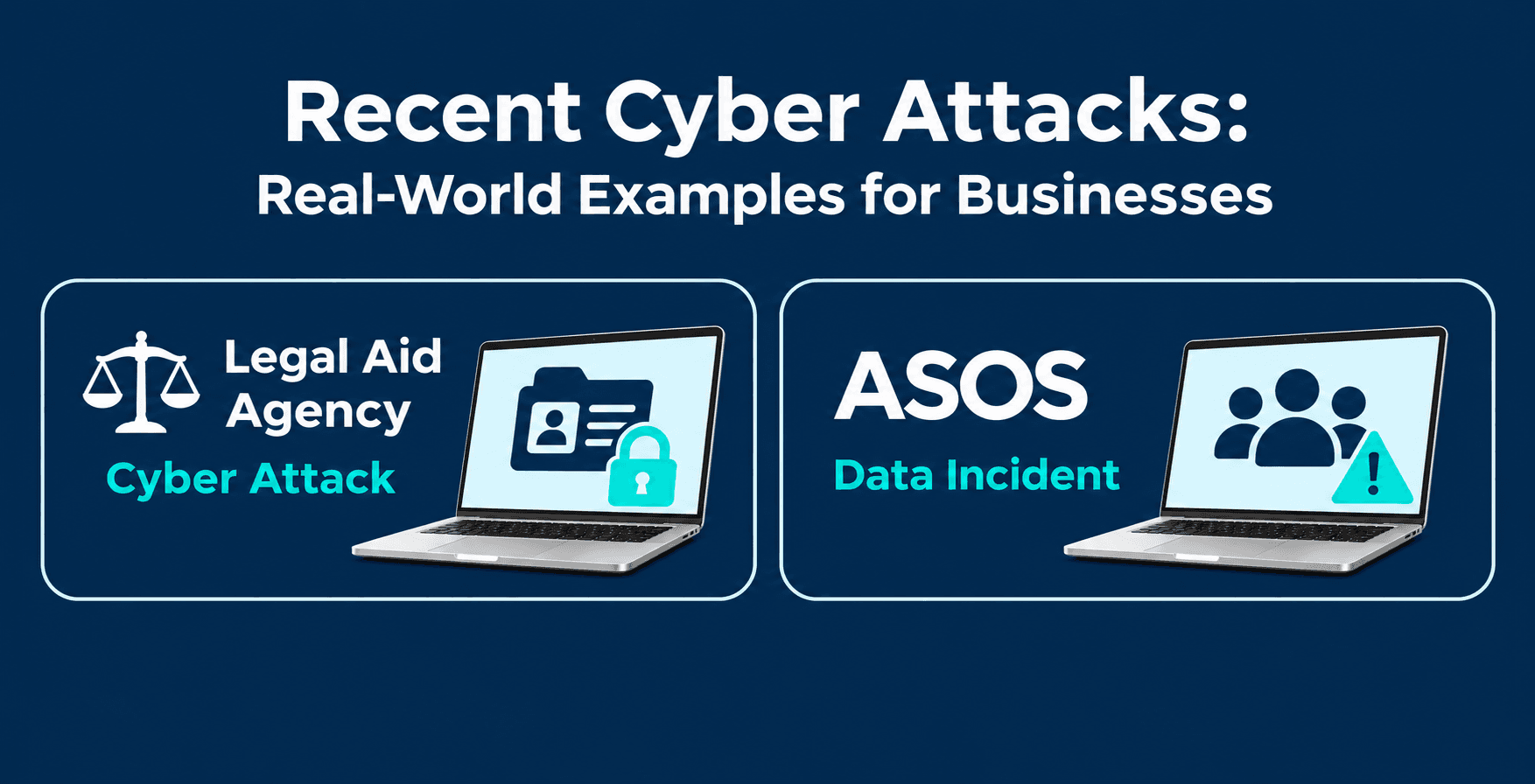
In April 2025, the UK's Legal Aid Agency identified a cyber attack affecting its online services. A subsequent investigation established that attackers had accessed and extracted a significant amount of personal data relating to legal aid applicants, including sensitive information. The incident highlighted the importance of protecting public-facing systems and monitoring access to sensitive records.
ASOS Customer Data Incident
In October 2026, ASOS investigated unauthorised activity involving third-party customer notification platforms. The incident involved access to basic customer information, including names and contact details. ASOS restricted access to the affected platforms and worked with specialist advisers and relevant authorities.
These incidents highlight two important lessons: businesses must secure their own systems and carefully manage the external platforms and suppliers they rely on. Effective access controls, third-party security assessments and continuous monitoring can help organisations identify and contain suspicious activity.
How Businesses Can Reduce Their Exposure to Cyber Threats
Businesses cannot eliminate every cyber threat, but they can reduce their exposure through consistent security practices, appropriate technology and effective risk management. The following measures help protect business systems, employees and sensitive information.
Strengthen Identity, Endpoint and Cloud Security
Enforce multi-factor authentication (MFA), restrict administrator privileges and review user permissions regularly. Keep operating systems, applications and security software updated to address known vulnerabilities. Secure cloud platforms through appropriate access controls, encryption and regular configuration reviews.
Improve Employee Awareness and Third-Party Risk Management
Train employees to recognise phishing attempts, suspicious attachments and fraudulent payment requests. Establish clear procedures for reporting suspicious activity. Assess suppliers and external service providers before granting access to business systems, and review their permissions and security practices regularly.
Monitor Threats and Prepare Incident Response
Monitor user activity, networks and business applications for unusual behaviour. Maintain secure backups and test data recovery procedures to support business continuity. Develop an incident response plan that defines responsibilities, escalation procedures and recovery actions so teams can respond effectively when an attack occurs.
The UK Government's cyber security guidance for businesses and the NCSC's advice for small and medium-sized organisations provide practical recommendations for improving cyber resilience.
For more detail on ongoing protection, read our guide to how managed IT security improves cyber security and compliance.
Why Choose DDevices?
Protecting a business against evolving cyber threats requires a structured approach to security, infrastructure and risk management. DDevices helps UK organisations strengthen their IT environments through integrated cybersecurity and managed IT services.
Its services include:
- Cyber Security Solutions: Threat monitoring, vulnerability management, incident response and security assessments.
- Identity and Access Management: Multi-factor authentication (MFA) and access controls to help prevent unauthorised system access.
- Cloud Security: Security solutions for Azure, AWS and hybrid cloud environments, including cloud security posture management.
- Managed Security Services: 24/7 monitoring and threat detection, supported by firewall and endpoint protection services.
- Risk and Compliance Support: Security assessments and support for frameworks such as Cyber Essentials Plus and ISO 27001.
By combining cybersecurity expertise with managed IT and cloud services, DDevices helps organisations improve visibility, strengthen protection and build greater operational resilience.
Looking to strengthen your organisation's cyber security? Explore DDevices Cyber Security Solutions or speak with our team about your business requirements.
Frequently Asked Questions
The biggest cyber security threats include phishing, ransomware, business email compromise, AI-powered fraud, identity theft, cloud vulnerabilities, insider threats, supply-chain attacks and unpatched software. These threats can expose sensitive information, disrupt operations and cause financial losses.
Phishing remains one of the most common cyber threats facing UK businesses. The UK Government's Cyber Security Breaches Survey 2025/2026 found that phishing accounted for 88% of reported breach and attack types among businesses that identified an incident. However, the biggest risk varies depending on an organisation's systems, industry and security weaknesses.
Ten major threats businesses should understand are phishing, ransomware, malware, business email compromise, AI-powered attacks, identity theft, cloud misconfigurations, insider threats, supply-chain attacks and unpatched software vulnerabilities.
Recent UK examples include the 2025 cyber attack on the Legal Aid Agency, which resulted in the extraction of significant amounts of personal data, and the October 2026 ASOS incident involving unauthorised access to customer information through third-party platforms. Both incidents demonstrate the importance of access controls, data protection and supplier security.