Strengthening the RF Links Behind CBP Remote Border Surveillance
For approximately ten years, Shireen has supplied RF amplification equipment to U.S. Customs and Border Protection, supporting the communications links that carry video, data and camera-control signals across remote border environments.
Begin the journey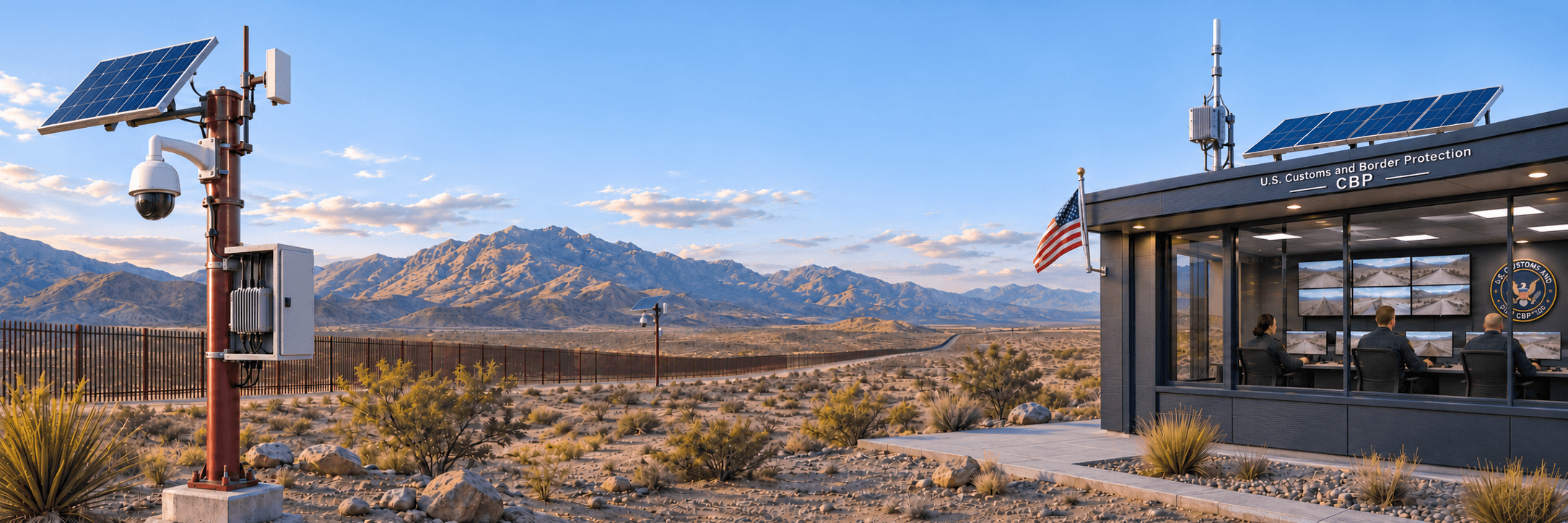
RF amplifiers delivered directly to CBP
documented delivery locations
years supporting CBP operations
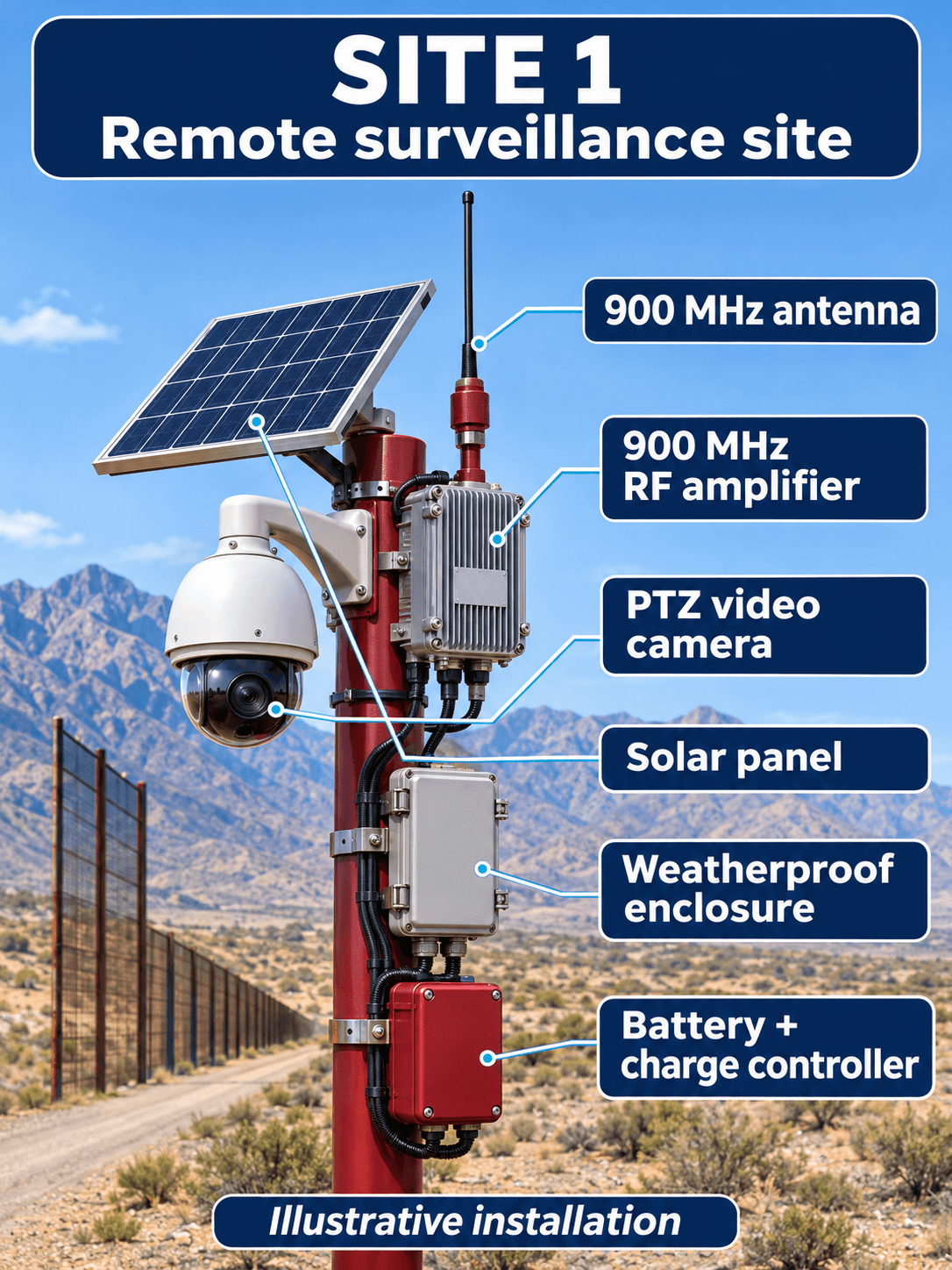
Connect surveillance sites beyond fixed infrastructure
A camera can provide visibility into a remote border area, but its information must reach the teams responsible for monitoring it.
Across CBP's operating environments, distance, terrain and limited infrastructure create practical challenges. Mountains and irregular ground affect radio paths. Remote locations may lack mains electricity or network connectivity, while difficult access complicates installation and maintenance.
The requirement was to strengthen those communications links while working within CBP's existing surveillance architecture.
Strengthening the RF communications path
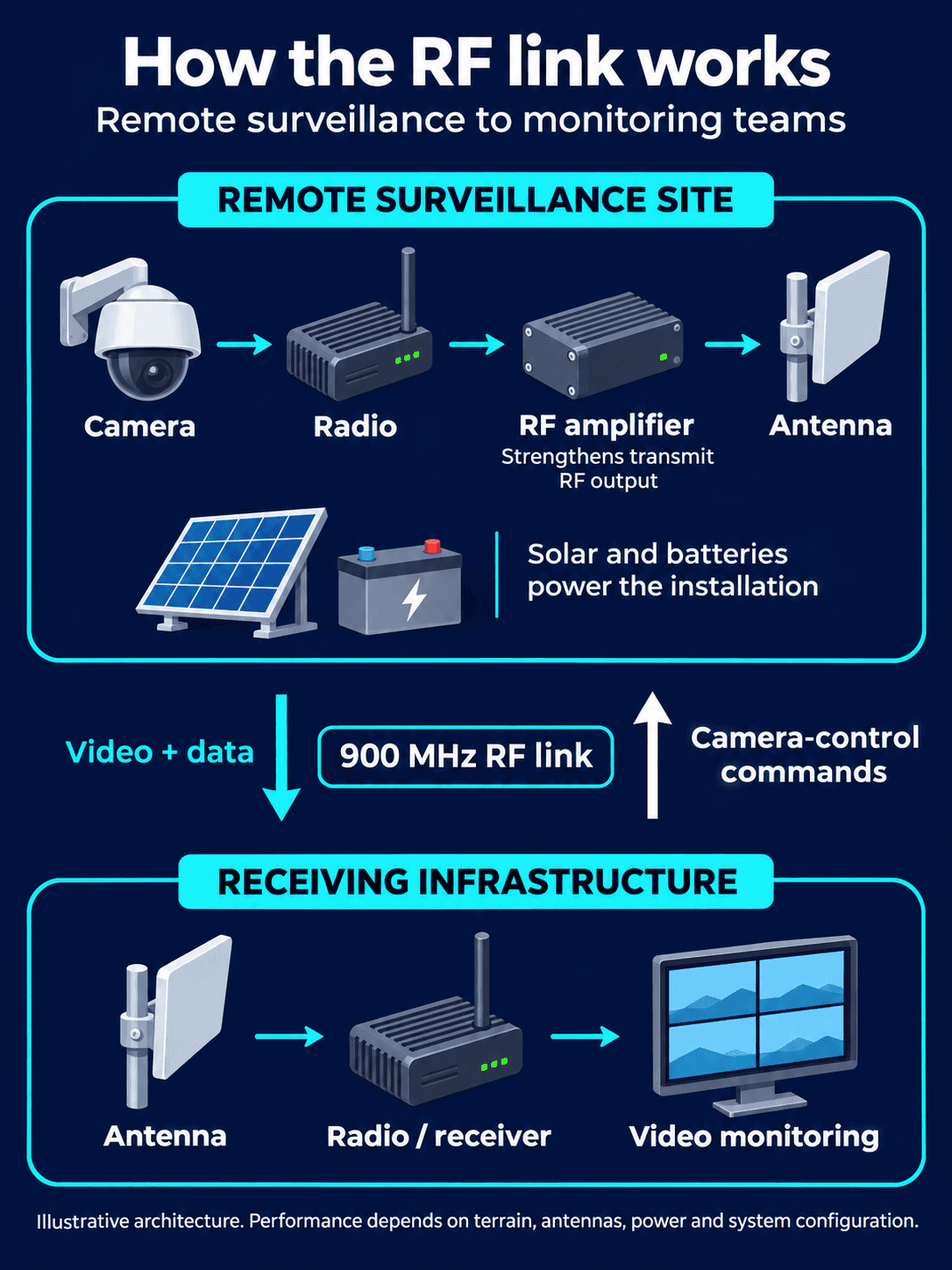
Shireen supplied 900 MHz RF amplification technology for incorporation into CBP's remote surveillance systems. Within a compatible radio link, the amplifier increases RF output to support video and data transmission from remote sites to receiving infrastructure. The return communications path carries camera-control information, including pan, tilt and zoom commands.
Shireen provides the amplification layer. CBP technical teams retain responsibility for system architecture, installation, integration, antenna configuration and connections to their surveillance networks.
This approach allows RF amplification to support existing surveillance equipment without replacing the underlying system architecture.
Surveillance at battery and solar-powered sites
Remote surveillance cannot always depend on mains electricity. Shireen's CBP supply history includes wide-voltage DC amplifiers used within battery- and solar-powered surveillance installations.
The supplied portfolio includes 900 MHz 2 W wide-voltage units, indoor and outdoor configurations, 10 W options, potted amplifiers and complete 12 V and 24 V kits. These configurations address different power supplies, installation conditions and RF output requirements.
Solar panels and batteries power the wider installation; the amplifier strengthens its RF communications path. Together with compatible radios, antennas and surveillance equipment, this arrangement supports video and data connectivity from locations beyond fixed power infrastructure.
A supply footprint across complex border environments
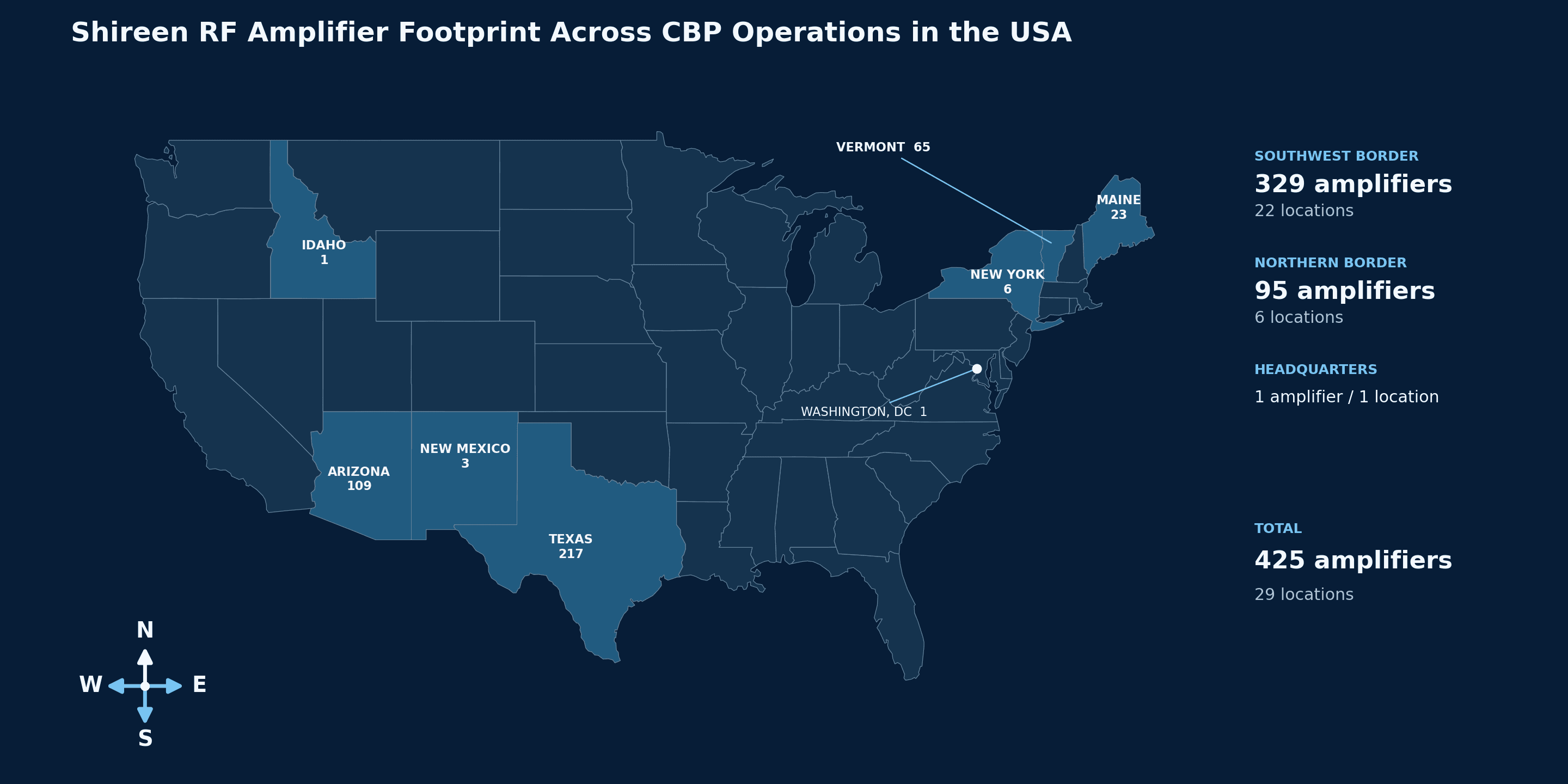
Shireen's records document 425 amplifiers delivered directly to CBP across 29 locations, including 28 border-region locations and CBP Headquarters. Additional equipment has been supplied through systems integrators supporting CBP requirements.
The Southwest footprint spans regions encompassing desert, valley, mountain, river and remote environments. Northern locations extend into forested, rural, mountainous, river, lake and cold-weather regions.
| Region | State | Locations |
|---|---|---|
| Southwest Border | Arizona, Texas and New Mexico | 22 locations, including Tucson, Nogales, El Paso, Del Rio, McAllen and Las Cruces |
| Northern Border | Idaho, Maine, New York and Vermont | Bonners Ferry, Hodgdon, Jackman, Malone, Richford and Williston |
| Headquarters | Washington, DC | CBP Headquarters |
A Decade of RF Support for CBP Surveillance
Across approximately ten years and 29 documented delivery locations, Shireen has supplied a focused component of CBP's surveillance infrastructure: RF amplification. Its role has been to strengthen the communications paths carrying video, data and camera-control signals between remote sites and receiving teams, including installations powered by batteries and solar energy.