
Why IT Infrastructure Management Matters in Modern Business
IT infrastructure is the foundation that powers every application, network, cloud platform, and digital service an organisation depends on. As businesses continue to embrace digital transformation and modernisation, hybrid working, and cloud technologies, managing that infrastructure effectively has become far more than an IT responsibility. It is a strategic business priority that underpins operational resilience, cybersecurity, cost optimisation, regulatory compliance, and long-term growth.
What Is IT Infrastructure
A few years ago, IT infrastructure simply meant a handful of servers sitting in a centralized room. That's no longer the case.
Today's infrastructure is a mix of different components working together, including:
- Servers and computers that run your business applications.
- Storage systems that hold your organization's data.
- Networks that connect your teams, sites, and customers.
- Cloud services that add extra capacity without new hardware purchases.
- Security tools that keep threats and unauthorized access out
Businesses used to own all of this outright. Now, most organizations manage a mix of owned, rented, and shared resources that all need to work together seamlessly. That coordination making sure every moving part performs reliably all the time is what infrastructure management actually means.
Why IT Infrastructure Management Really Matters
IT infrastructure often delivers its greatest value when it operates without disruption, which is why many organisations only recognise its importance when something goes wrong. Viewing infrastructure as simply another operational expense can leave businesses exposed to unnecessary risks, from costly downtime and security incidents to reduced productivity and lost revenue. The following examples illustrate how decisions around IT infrastructure management can directly influence business resilience, operational performance, and long-term success.
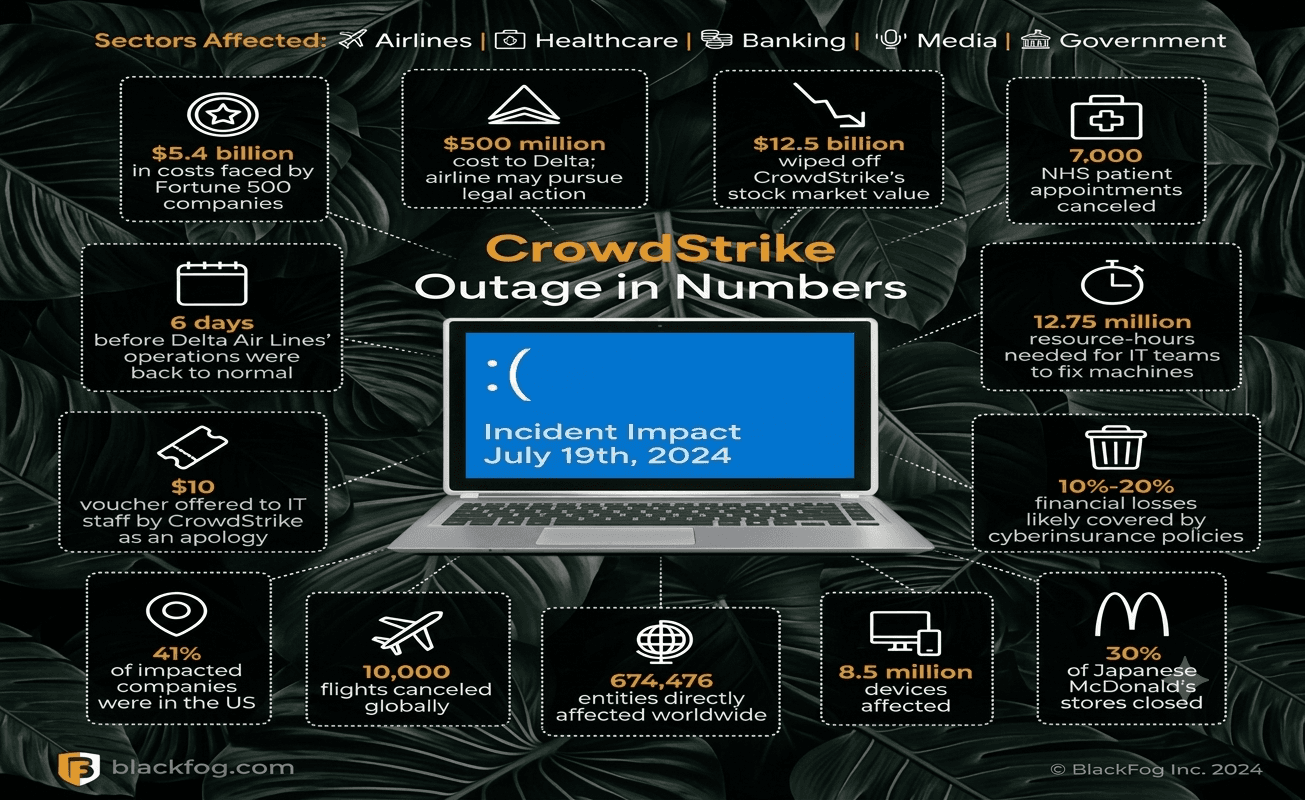
When It Goes Wrong: The CrowdStrike Outage
In July 2024, a single faulty software update from one security vendor triggered a massive global IT outage. Around 8.5 million Windows devices crashed within hours of each other.
Flights were grounded. Hospitals postponed surgeries. Banks were unable to process payments. Crucially, this wasn't a cyberattack, it was one flawed update that infrastructure teams weren't prepared to recover from quickly.
When It Goes Right: The Domino's Story
Here's the other side of the coin. Some years ago, Domino's Pizza made a deliberate, board-level decision to invest heavily in its digital and IT infrastructure, digital sales channels, mobile apps, and delivery tracking systems.
The joke at the time was that Domino's had become "a technology company that happens to sell pizza." But the investment paid off. Digital ordering became one of the biggest drivers of the company's growth, and Domino's pulled ahead of competitors who were slower to modernize their systems.
Same industry, two very different outcomes and the difference came down to how seriously each business treated its infrastructure.
Five Simple Reasons Infrastructure Management Matters for Any Business
- It keeps your business online. Customers and clients expect your systems to work, every time, without exception.
- It keeps your business secure. Well-managed infrastructure makes it significantly harder for hackers and ransomware to cause damage.
- It controls your costs. Unmanaged cloud spend adds up quietly; many organizations waste 30-40% of their cloud budget without realizing it.
- It enables AI adoption. Most businesses want to use AI tools, but lack the underlying infrastructure (processing power, fast data access) to use them effectively.
- It improves operational speed. When infrastructure is automated and well organized, your technical teams spend less time firefighting and more time delivering value
What's New in IT Infrastructure Right Now
Infrastructure is evolving quickly. Here are the trends currently shaping how organizations plan and invest:
- Hybrid and multi-cloud setups: Most organizations now use more than one cloud provider, or a mix of cloud and on-premises infrastructure, to avoid dependency on a single point of failure.
- AI-ready infrastructure: Running AI tools requires serious processing power and fast data pipelines. Organizations are investing specifically to support this.
- Edge computing: Rather than sending all data to a distant data center, processing increasingly happens closer to where it's generated for example, on a factory floor or in a retail location reducing delay.
- Zero Trust Security: Older security models assumed anything inside the network perimeter was safe. Modern security verifies every request, regardless of where it originates.
- Composable infrastructure: Rather than fixed, rigid systems, organizations can now combine compute, storage, and networking like modular building blocks, reconfiguring them as business needs change.
| Legacy Approach | Modern Approach | |
|---|---|---|
| Where it lives | Mostly on-site servers | A mix of cloud, on-site, and edge |
| Scaling up | Slow, planned months ahead | Fast, automatic, on-demand |
| Security | Trust anything inside the network | Verify everything, every time |
| Fixing problems | Fix it after it breaks | Spot and fix issues before they break |
| Setting things up | Manual, ticket-based, slow | Self-service, automated, fast |
| Costs | Reviewed once a year | Reviewed and optimized constantly |
How to Get Started
If you're a business leader wondering where to begin here are few steps which help out to take a start:
- Map out what depends on what: Know exactly what breaks if one system or provider goes down.
- Set clear recovery goals: Decide how fast you need to recover from a failure, and actually test it.
- Review your cloud spending regularly: Don't let it become a once-a-year surprise.
- Automate the repetitive stuff first: Routine tasks like updates and scaling are the easiest wins.
- Build security in from the start: Don't treat it as something you add on later.
Final Thoughts
IT infrastructure used to be something businesses could leave running quietly in the background and never think about. That's no longer realistic.
Organizations that treat infrastructure as a genuine strategic priority not just a cost to minimize are the ones that stay online when others go down, move faster than their competitors, and get real value from new technology like AI.
The real question isn't whether infrastructure matters to your organization. It's whether you'll invest in managing it properly before something forces the issue or after. The good news: building that foundation doesn't have to start from scratch.